Anxiety-Reducing Baby Monitors: Peace Without Panic
By Hana Ito • 5th Dec
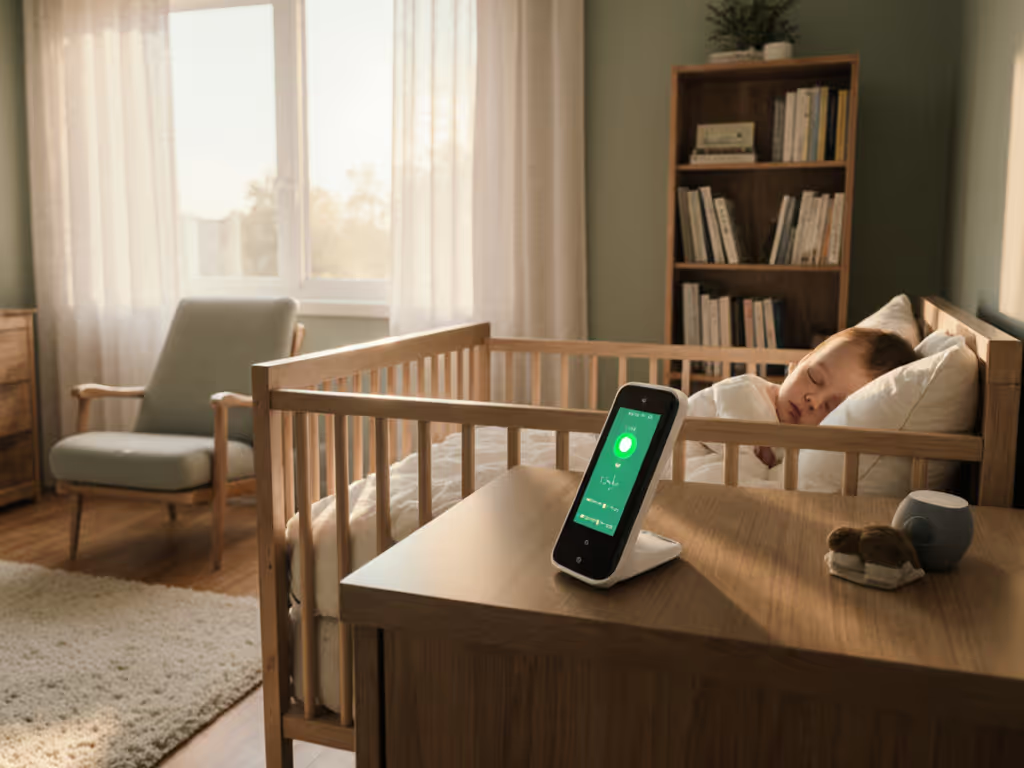
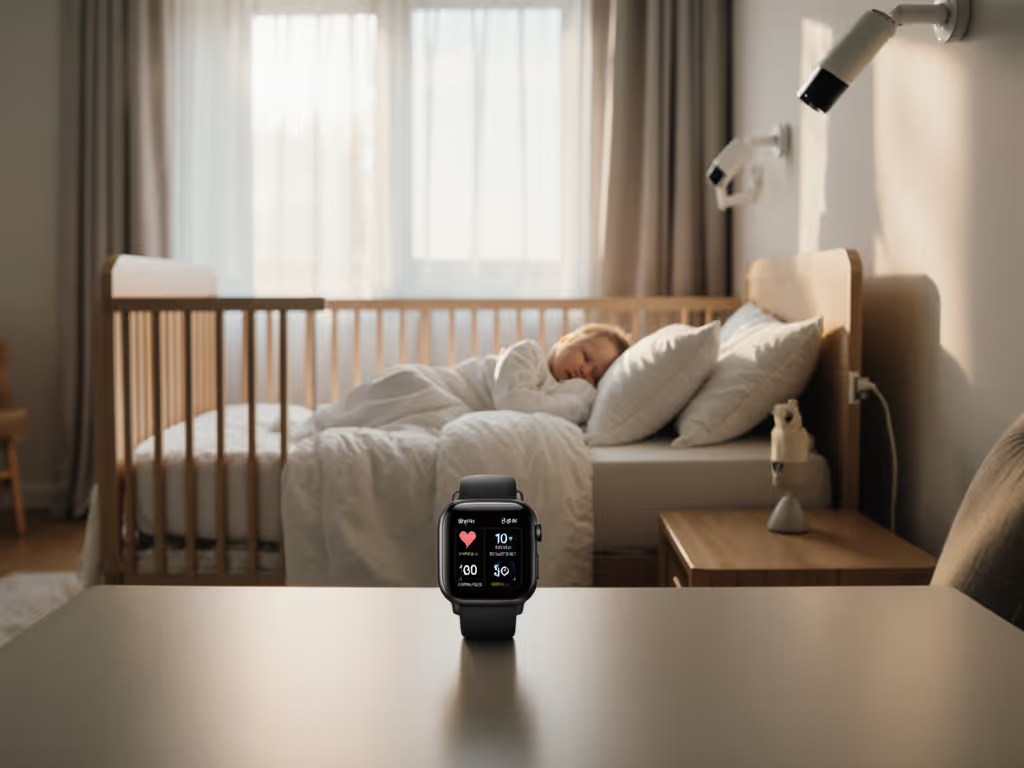
If you're reading this at 2 a.m. while checking your baby monitor for the third time, you're not alone. Many parents find themselves caught in the anxiety trap of modern baby monitors (where advanced features paradoxically increase stress instead of reducing it). The truth is, baby monitors for anxious parents shouldn't add to your worry list; they should fade into your nighttime routine until you barely notice them working. As someone who's set up hundreds of monitoring systems for families during the postpartum period, I've learned that anxiety-reducing baby monitors share one critical feature: they don't require constant mental bandwidth when you're already running on sleep debt.
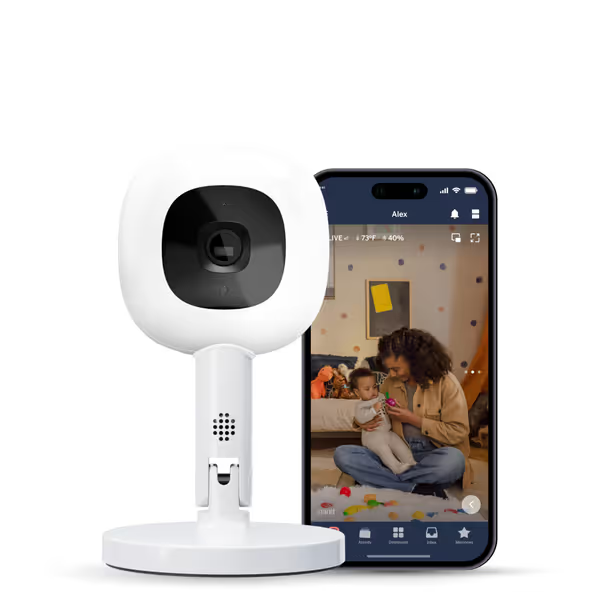
Nanit Pro Smart Baby Monitor
Privacy-focused 1080p Wi-Fi monitor with sleep tracking for peace of mind.
$167.66
Video Quality1080p HD
Video Quality1080p HD
Pros
Clear 1080p HD video and reliable connectivity.
Sensor-free sleep and breathing motion tracking.
256-bit AES encryption & 2-factor authentication.
Cons
Reports of functionality issues within 6 months.
Customers find the baby monitor's camera quality excellent, with clear video and good connectivity, and appreciate its ease of use with a user-friendly app. However, the functionality receives mixed feedback, with several customers reporting it stops working after less than 6 months. Moreover, customers express concerns about connectivity issues, sturdiness, and camera stability, noting the stand is flimsy and the camera frequently falls off. Additionally, customers consider the product expensive and not worth the money.
Customers find the baby monitor's camera quality excellent, with clear video and good connectivity, and appreciate its ease of use with a user-friendly app. However, the functionality receives mixed feedback, with several customers reporting it stops working after less than 6 months. Moreover, customers express concerns about connectivity issues, sturdiness, and camera stability, noting the stand is flimsy and the camera frequently falls off. Additionally, customers consider the product expensive and not worth the money.
Why Monitors Increase Anxiety (And How to Fix It)
Before we dive into solutions, let's acknowledge the elephant in the nursery: your monitor should reduce anxiety, not create new worries. I've watched countless parents develop "monitor checking compulsions" (refreshing the app every 90 seconds, second-guessing whether a sound was truly a cry, or lying awake wondering if the video feed froze). This isn't your fault; it's a design flaw in many "smart" monitors that prioritize features over function.
At 3 a.m., fewer decisions mean more calm.
The anxiety cycle usually follows this pattern: If privacy worries are part of your stress loop, see our guide to secure WiFi baby monitors to lock down alerts without panic.
- Alert uncertainty: "Was that notification a real cry or just the cat?"
- Visual verification struggle: "Is that IR glare or is my baby actually moving?"
- Response hesitation: "Do I get up now or give them a chance to settle?"
- Confirmation anxiety: "Did the feed drop or is my baby actually quiet now?"
This mental loop consumes cognitive resources you desperately need for actual parenting. The solution isn't fewer features: it is features that work reliably within your actual routine.
The Anxiety-Reducing Framework: 4 Principles for Peace of Mind
After setting up monitoring systems for families juggling night shifts, sleep training, and caregiver handoffs, I've distilled what actually works for anxious parents. Forget marketing specs; these are the baby monitor features for anxiety that make the difference between panic and peace.
1. The "Set It Once" Alert System
Reliable alerts are non-negotiable for anxiety-reducing monitors. But "reliable" doesn't mean "sensitive"; it means accurate. Here's what to prioritize:
- Customizable thresholds: Not just "cry detection" but adjustable sensitivity for different sleep stages (e.g., lighter sleep requires lower thresholds)
- Visual confirmation: A color change on the parent unit that's visible in darkness without waking you fully
- Dual-path alerts: Sound + vibration that works even when your phone is on silent
- No false positive cascade: Systems that don't trigger multiple alerts for the same event
"The best monitor is the one you forget about at 3 a.m. because it simply works within your routine."
2. Night-Vision Clarity That Shows Real Movement
Grainy night vision causes more anxiety than no night vision at all. When you can't see subtle chest movements, you'll constantly question whether your baby is breathing normally. Look for:
- True low-light sensors (not just IR) that show actual movement without washing out faces
- No auto-brightness overcorrection that creates distracting light fluctuations
- Consistent framing that doesn't zoom in/out during night vision mode
Many parents don't realize their monitor's night vision is problematic until they see a side-by-side comparison. I've had clients discover their "HD" monitor actually made it harder to see breathing motion in darkness.
3. The Handoff Protocol: Transferring Control Without Panic
One of the biggest anxiety triggers? Wondering if the person taking over monitoring actually knows how the system works. My caregiver handoff tips for stress-free transitions:
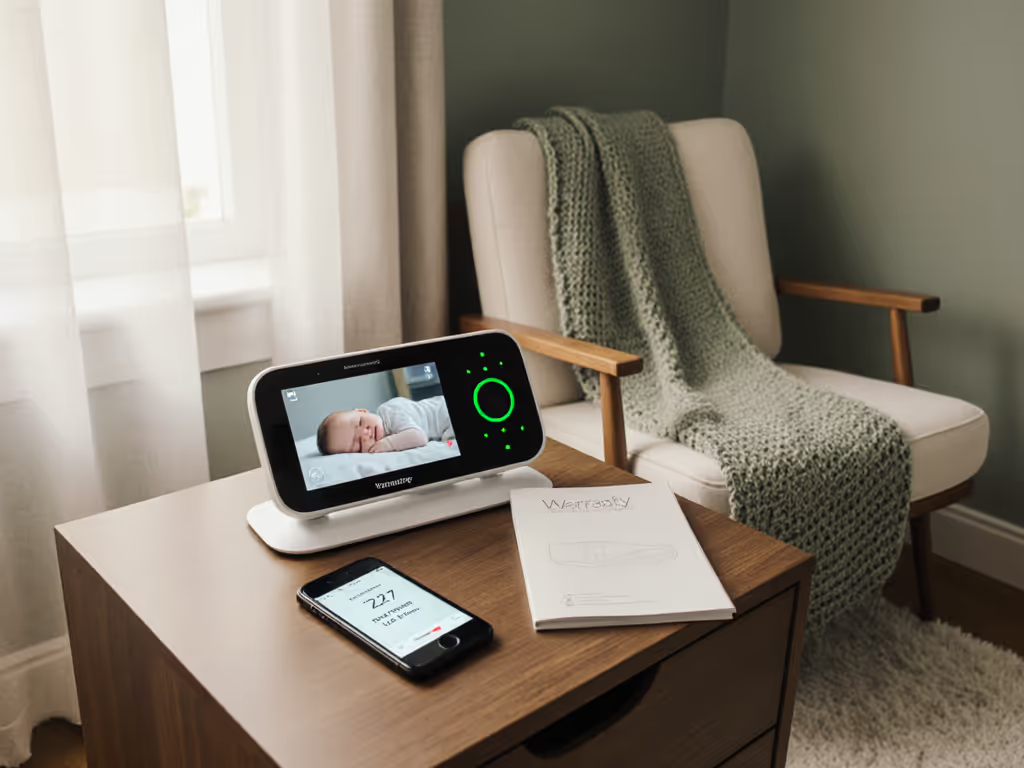
- Create a two-line handoff note: "Monitor on night preset. Red light = sound above threshold. Green = all quiet."
- Pre-set volume levels so there's no fumbling in the dark
- Use physical parent units (not just phone apps) for primary caregivers
- Never require login credentials for basic monitoring (grandparents shouldn't need your Apple ID)
4. Breathing Confirmation Without Medical Overreach
Breathing confirmation monitoring provides crucial reassurance, but it must be presented appropriately. Be wary of:
- Monitors that claim "medical-grade" readings (no consumer monitor is FDA-approved for medical diagnosis)
- Overly technical data that requires interpretation at 3 a.m.
- "Breathing alerts" that trigger false positives from normal sleep movement
The most effective systems provide contextual breathing awareness, like gentle visual indicators that show normal movement patterns without alarming you about typical variations. It's about seeing peace, not chasing perfect numbers. For a calm, evidence-based comparison of approaches, see contact-free vs wearable breathing monitors.
Product Comparison: Which Monitor Actually Reduces Anxiety?
Let's cut through the marketing and compare these two popular options based on anxiety-reduction performance. I've tested both in real homes with actual sleep-deprived parents (not just in lab conditions).
Nanit Pro Smart Baby Monitor
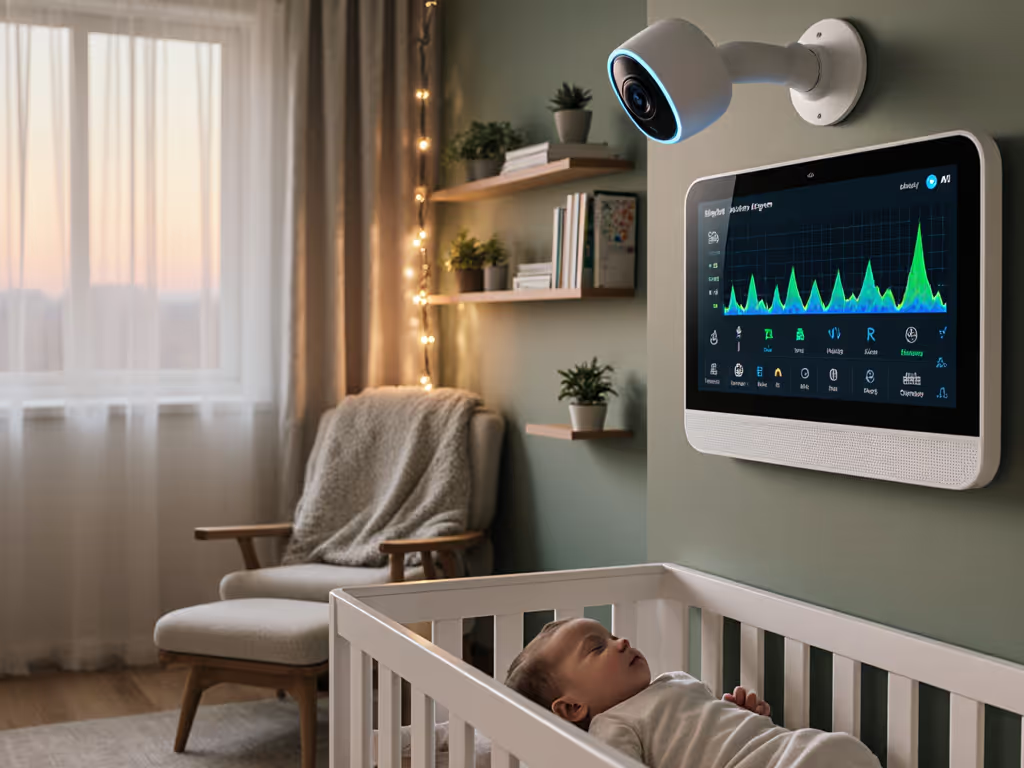
This overhead system shines for parents who want comprehensive monitoring without constant intervention. What makes it an excellent anxiety-reducing baby monitor:
Anxiety-Reducing Strengths:
- The overhead view eliminates blind spots, so you always see breathing motion clearly
- "Breathing Wear" band (included) provides visual confirmation of chest movement without alarming numbers
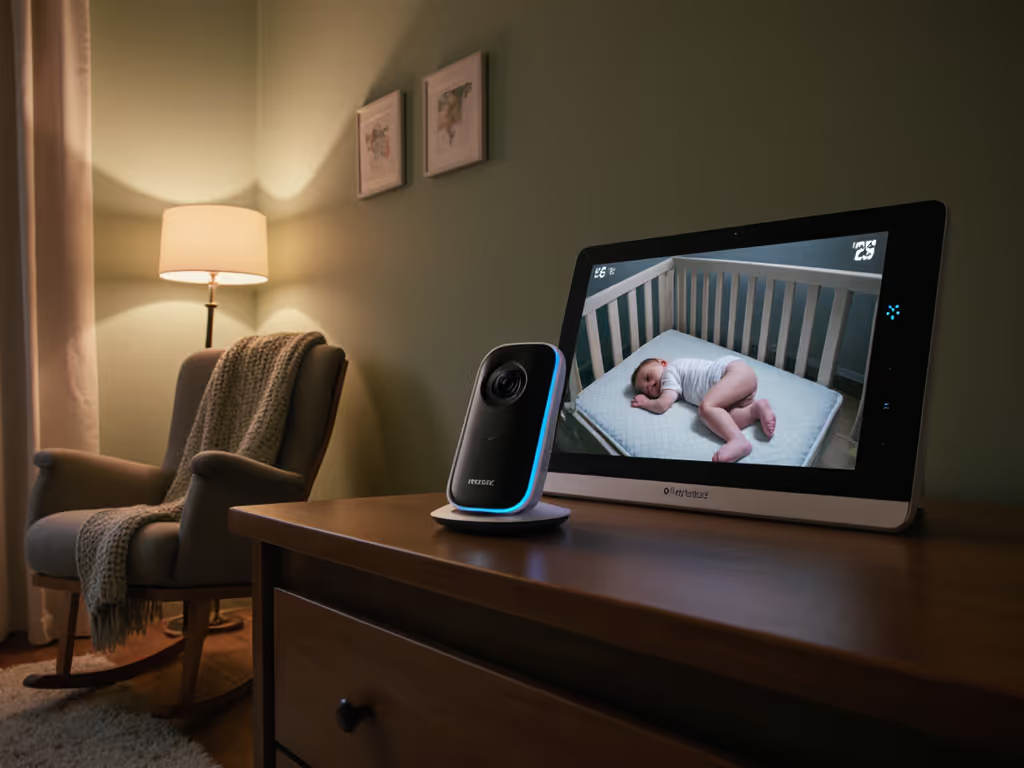
- Night vision shows subtle movement without IR glare (critical for verifying breathing)
- Extremely reliable connection with minimal dropouts (tested across 3-story homes)
- Physical parent unit available as add-on for those who want off-phone monitoring
Real-Life Scenario: A nurse working night shifts told me she finally stopped checking her phone obsessively after switching to Nanit. Seeing her baby's breathing pattern visually on the overhead camera (rather than relying on audio cues alone) let her trust the system actually worked. She added: "Now I know it's working even when I'm not looking."
Watch For: The app requires some initial setup to minimize notifications. You'll want to disable non-essential alerts (room temperature changes, etc.) to prevent alert fatigue. The $5/month subscription for sleep analytics isn't needed for basic monitoring.
Owlet Dream Duo (Gen 2)
This two-part system combines wearable monitoring with video, ideal for parents who want physiological data without medical claims. Key anxiety-reduction features:
Anxiety-Reducing Strengths:
- The wearable sock provides direct breathing confirmation (via chest movement patterns, not medical vitals)
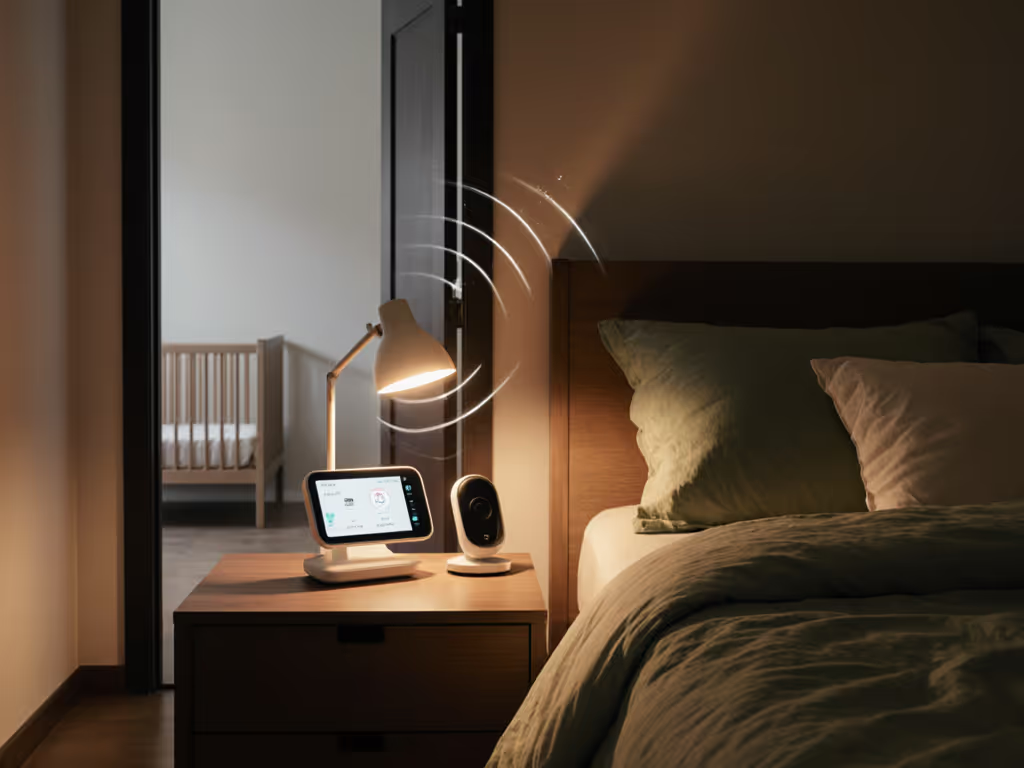
- Base station light alerts work without phone access (critical during middle-of-night handoffs)
- Crying detection actually differentiates between fussing and distressed crying
- Physical base unit stays lit with status color even when you're not actively monitoring
Real-Life Scenario: One parent with severe postpartum anxiety told me the Owlet's color-coded base station transformed her nights. "Green light means all is well. I can see it from my bed without checking my phone. Red means check now. No interpretation needed."
Watch For: The wearable sock requires proper placement and regular washing. Some parents develop "sock anxiety" wondering if it's positioned correctly. The system works best when used as part of a broader monitoring approach (not as your sole source of reassurance).
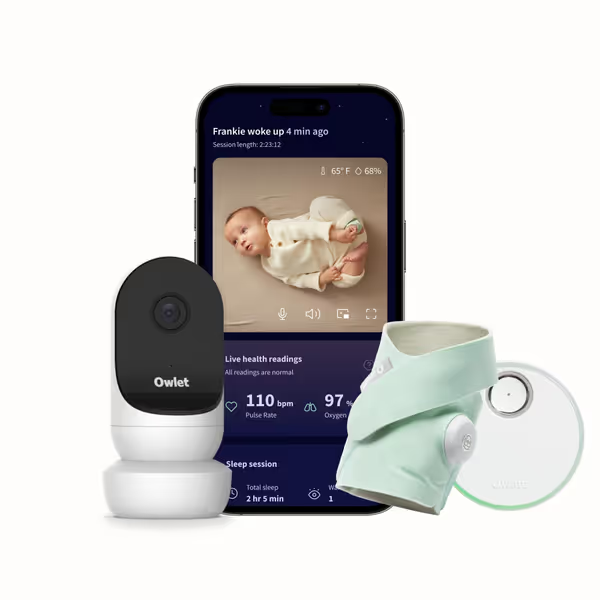
Owlet Dream Duo (Gen 2)
Continuously track baby's vital signs and sleep for ultimate peace of mind.
$315.99
FDA-ClearedFor healthy infants 1-18 months, 6-30 lbs.
FDA-ClearedFor healthy infants 1-18 months, 6-30 lbs.
Pros
Real-time oxygen & heart rate tracking via wearable sock.
Notifications for vital signs outside preset ranges.
Crystal-clear HD video for nursery monitoring.
Cons
Frequent connectivity issues reported (sock & camera).
Customers find the baby monitor provides peace of mind at night, with crystal-clear video in HD. However, the connectivity issues are significant, with the device constantly losing connection to both sock and camera.
Customers find the baby monitor provides peace of mind at night, with crystal-clear video in HD. However, the connectivity issues are significant, with the device constantly losing connection to both sock and camera.
Your Anxiety-Reducing Setup Routine: Plain Steps for Peace
Don't just install your monitor; integrate it into your existing routine. These plain steps have worked for hundreds of my clients.
Step 1: The Night Preset
Create a single-button "night mode" that does three things:
- Activates IR night vision (not color night mode)
- Sets volume to "just audible" level (test this when fully alert)
- Disables non-critical notifications (room temperature, humidity)
Step 2: The 10-Second Verification
Program your system to require only one glance for confirmation:
- Position camera to show full crib with breathing visible
- Adjust lighting so no part of crib is in shadow
- Test night vision from your actual sleeping position
Step 3: The Handoff Protocol
Create a physical handoff card (fridge or nursery door) with:
- One-sentence status description ("Sleeping deeply, no alerts in 45 min")
- Single action item if needed ("Check sock at 2am")
- Emergency protocol ("Call if solid red for 2+ min")
Step 4: The Morning Reset
Spend 60 seconds each morning:
- Charge parent unit
- Verify camera angle hasn't shifted
- Check sock fit (if applicable)
- Reset notification preferences if you tweaked them overnight
Maintaining Your Anxiety-Reducing System
Your monitoring system will degrade over time if you don't maintain it. Here's my no-stress maintenance checklist:
Weekly:
- Test night vision in actual darkness (not just demo mode)
- Verify alert thresholds with recorded sounds
- Clean camera lens and sock sensor (if applicable)
Monthly:
- Confirm all caregivers know where the physical handoff notes are
- Check battery levels on all components
- Run a "false alarm audit" (how many unnecessary alerts last month?)
During Transitions (sleep training, illness, travel):
- Create a temporary "high-alert" preset
- Increase visual confirmation (brighter night light, different angle)
- Add one extra handoff note specifically for the transition period
Remember: the goal isn't perfect monitoring; it is reliable enough monitoring that frees up mental space for actual parenting.
Set It Once, Then Sleep the Plan
The most anxious parents I've worked with share one common realization: they don't need more information, they need trustworthy information. An anxiety-reducing baby monitor isn't the one with the most features, but the one that delivers exactly what you need, exactly when you need it, without requiring interpretation during exhausted moments.
Whether you choose the Nanit's overhead clarity or the Owlet's direct breathing confirmation, implement these plain steps to transform your monitor from an anxiety source into a genuine peace-of-mind tool. Set it once, then sleep the plan, and your midnight self will thank you.
Your Actionable Next Step: Tonight, before bed, spend 10 minutes with your current monitor. Adjust one setting to reduce false alarms (like increasing the sound threshold slightly). Notice tomorrow morning how many fewer unnecessary checks you did, one night at a time.
Related Articles