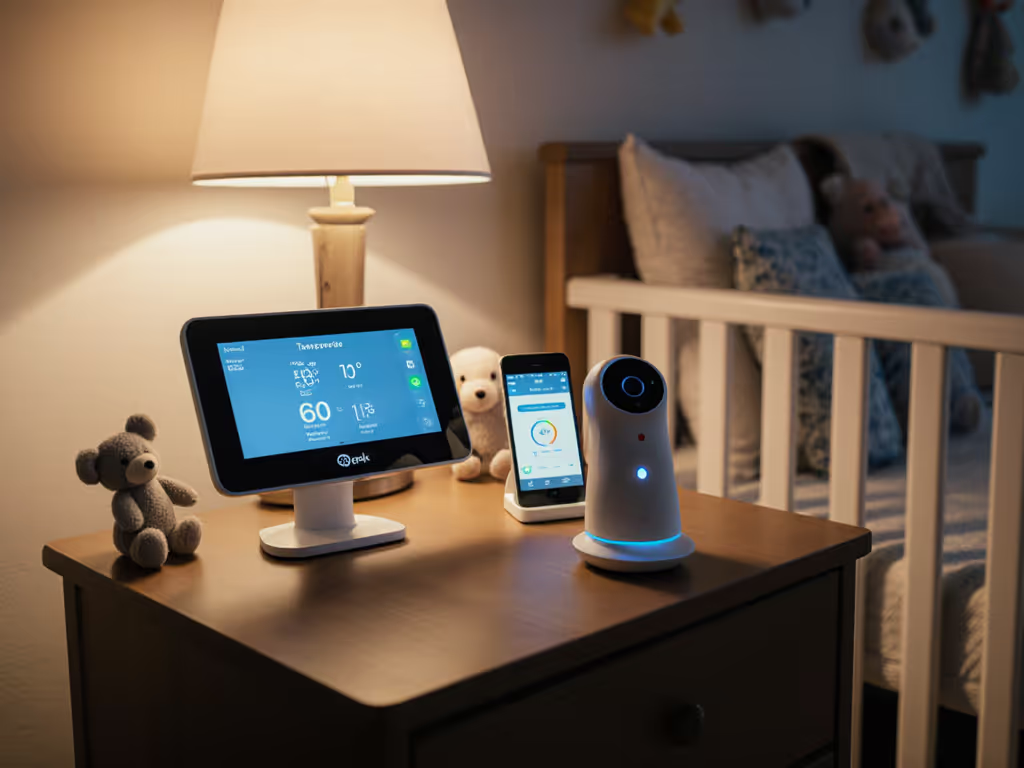
Extend Your Baby Monitor Into Toddler Years
By Hana Ito • 9th Jan
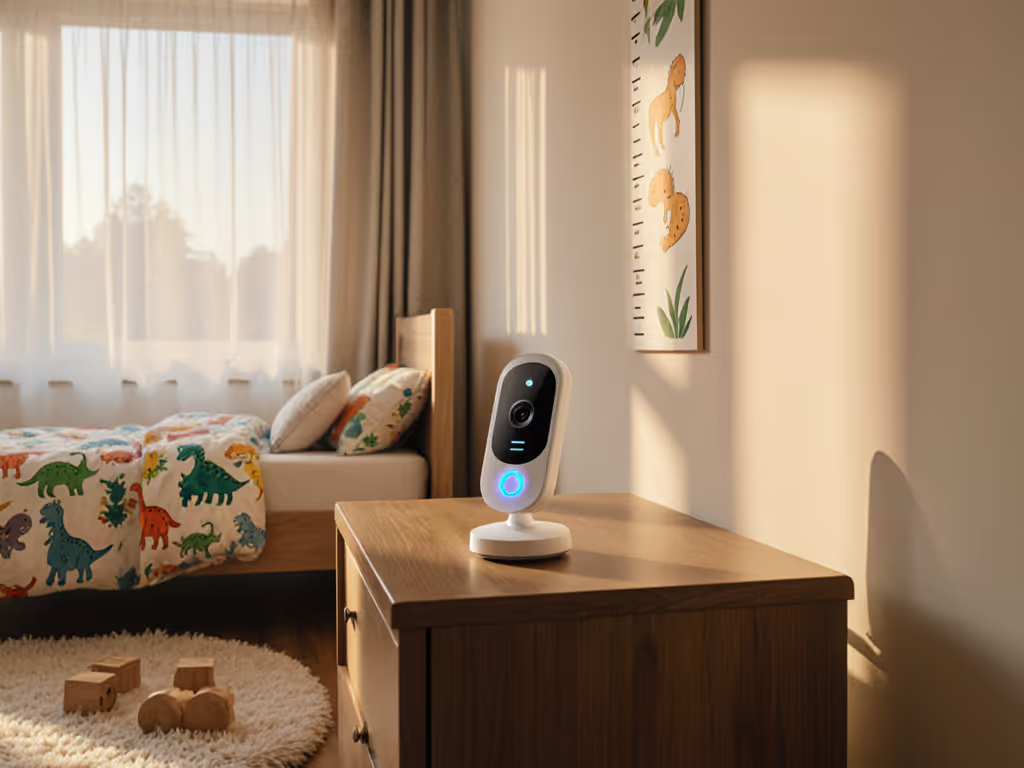
As your child grows from infancy into those energetic toddler years, your toddler-transition baby monitor needs shift significantly. This isn't just about continuing surveillance (it's about implementing a growing-with-baby monitoring system that adapts to your changing family rhythm). Today's guide offers practical strategies to ensure your monitoring solution remains reliable through developmental leaps, caregiver changes, and those inevitable middle-of-the-night moments when you're running on sleep debt.
At 3 a.m., fewer decisions mean more calm.
Why Your Monitor Needs to Evolve as Your Child Grows
Recognizing Developmental Shifts
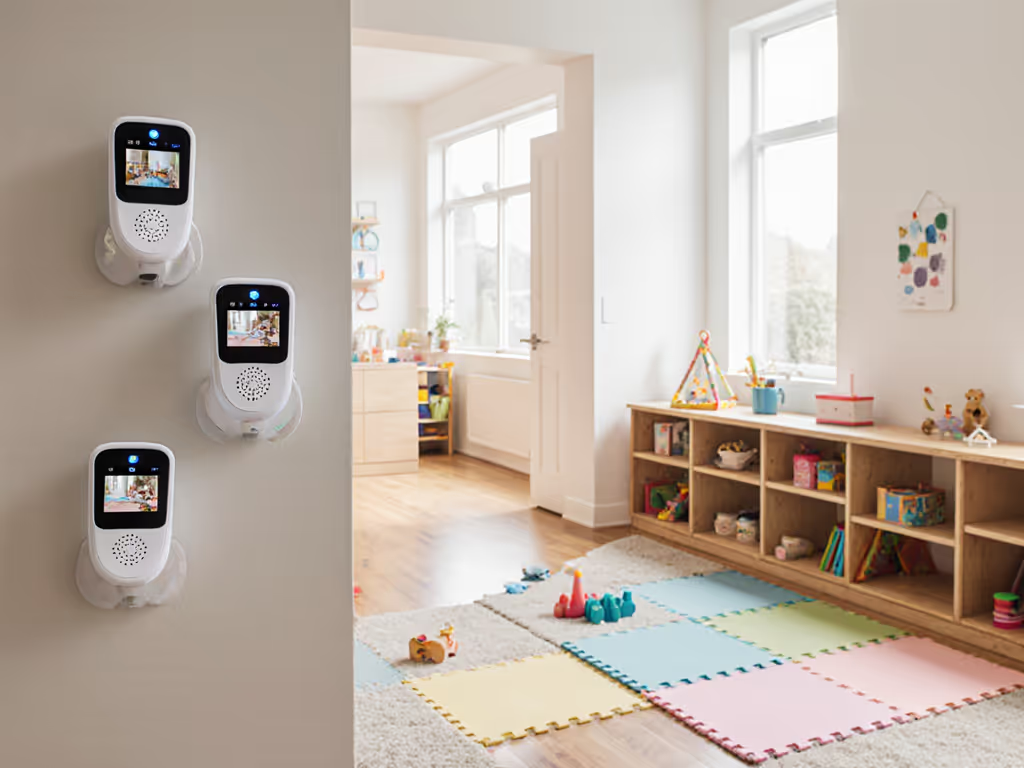
When your baby transitions to toddlerhood, their room transforms from a passive sleep space to an active play environment. Your once-stationary infant now climbs, explores, and may even attempt daring escapes from their bed. For feature priorities tailored to this stage, see our mobile toddler monitor guide. This developmental stage monitoring requires more than just keeping the same camera pointed at the crib (it demands thoughtful adjustments to how you monitor).
The monitor that served you well during infancy might now struggle with:
- Active child monitoring upgrade needs as your toddler moves around the room
- Changes in lighting conditions when nightlights or hallway lights stay on
- New sounds that trigger false alarms (toys, talking to themselves)
- Different sleeping positions that make breathing harder to track visually
When Your Current Setup Needs Tuning
Before considering replacement, examine whether your existing monitor simply needs recalibration. Many parents reach for new equipment when thoughtful adjustments to their current extended-use nursery camera could suffice. Ask yourself:
"Is my monitor failing because of my child's growth, or because I haven't adjusted settings to match their new reality?"
Practical Steps for Smooth Monitoring Transitions
Adjusting Monitor Features for Active Toddlers
Rather than replacing equipment prematurely, try these plain steps to optimize your current system:
- Reposition your camera to capture the entire floor area, not just the sleeping surface
- Widen the viewing angle if your toddler is mobile but avoid fish-eye distortion that obscures details
- Adjust motion sensitivity to ignore normal toddler movements but still detect significant activity
- Customize sound thresholds to filter out self-soothing chatter while still catching genuine distress cries
A family I recently worked with was considering buying a new monitor because their toddler kept "disappearing" from view. We simply adjusted their existing camera's tilt and enabled the "wide scan" feature. For best-practice camera placement and quick fixes, use our setup and placement guide. Your future 3 a.m. self will thank you for taking five minutes now to avoid middle-of-the-night frustrations.
Creating Night-Ready Presets
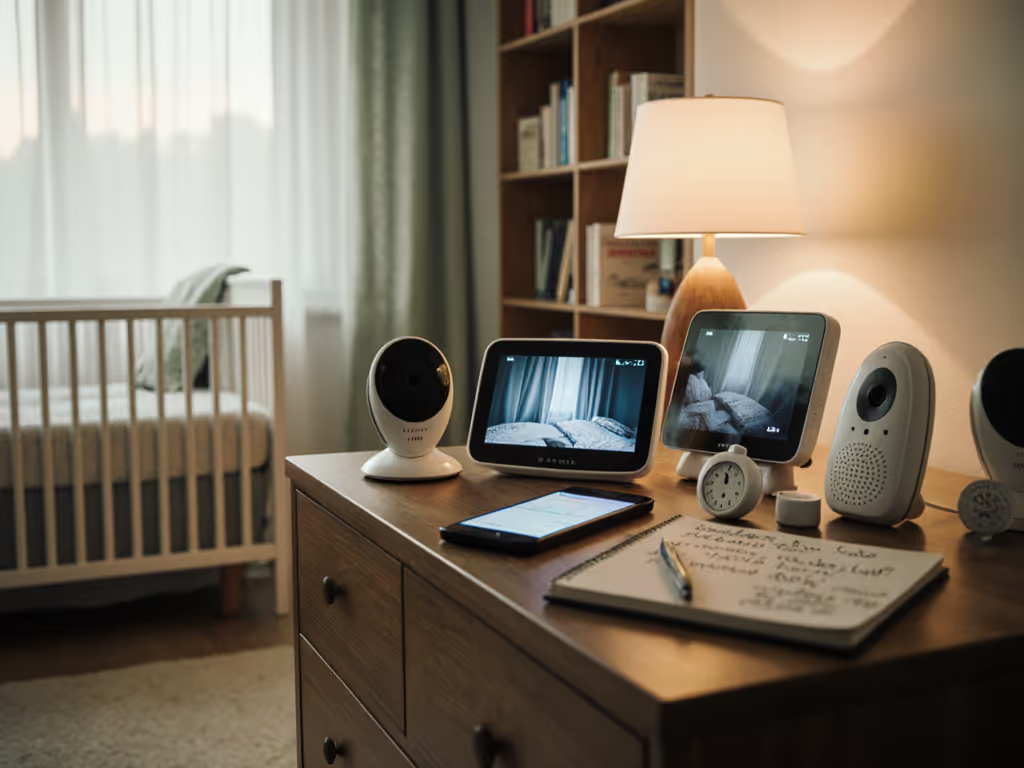
The mental load of managing technology disappears when settings become automatic. Develop a simple two-step routine:
- Evening preset: Lower sensitivity as bedtime approaches, activate lullaby mode if needed
- Night preset: Maximize night vision clarity, reduce motion sensitivity to account for normal toddler movements, and enable voice activation (VOX) to conserve battery
Caregiver Handoff Tips for Seamless Monitoring
Simplifying Transitions Between Caregivers
Shift work and shared parenting arrangements require clarity. See our multi-user monitor picks for households with grandparents and caregivers. Instead of complex app instructions that change nightly, create a standardized handoff process:
- Two-line handoff note: "Monitor on night mode. Toddler climbed once tonight at 2:15."
- Physical indicator: A colored sticker on the monitor unit showing which preset is active
- One-touch emergency response: Program a single button to activate both flashlight and speaker
Real-life scenario: A nurse mother and firefighter father struggled with inconsistent monitoring during their shift changes. We implemented a simple color-coded system with preset buttons labeled "day," "evening," and "night." Three weeks later, they reported no more missed alerts or confusion about settings.
Training Non-Technical Caregivers
Grandparents and babysitters shouldn't need tech support to monitor your child. When possible:
- Use physical buttons instead of app controls
- Label buttons with simple icons (moon for night mode, sun for day)
- Create a laminated quick-reference card with just three essential functions
Your future 3 a.m. self will breathe easier knowing anyone caring for your child can operate the monitor without fumbling for settings.
When to Consider an Upgrade
Evaluating Your Current System Honestly
Not every monitor grows with your child. Consider an upgrade when you notice these signs:
- Video feed can't maintain connection when your toddler moves between bed and play area
- Night vision creates glare that obscures facial expressions and breathing
- Critical alerts get buried in app notifications during busy household moments
- Setup requires technical knowledge beyond what caregivers possess
Rather than focusing on "new features," look for a toddler-proof baby monitor that addresses your specific pain points. The right upgrade solves concrete problems in your home layout and routine, not hypothetical scenarios.
Making Future-Proof Choices
If shopping for a new monitor, prioritize these often-overlooked features:
- Physical volume controls that remain accessible in darkness
- Dedicated night vision button (not buried in app menus)
- Battery life that lasts through power outages
- Simple pairing process for guest caregivers
Remember that the best monitor is the one you forget about at 3 a.m. because it simply works within your routine. Technology should serve your family's needs, not dictate them.
Building Your Long-Term Monitoring Strategy
Creating a Monitoring Timeline
Instead of viewing baby monitors as temporary infant gear, consider them part of your long-term safety strategy. Create a simple timeline based on your child's development:
| Age Range | Monitoring Focus | Key Adjustments |
|---|---|---|
| 12-18 months | Safety awareness | Widen camera view, lower motion sensitivity |
| 18-24 months | Toddler mobility | Floor-level monitoring, night vision optimization |
| 24-36 months | Independence development | Strategic placement outside room, audio-only options |
Planning for the Next Transition
Your monitoring needs will continue evolving. Build flexibility into your routine now:
- Document simple adjustment procedures in a visible place
- Choose equipment with physical controls that remain consistent across models
- Establish "monitoring check-ins" during routine pediatric visits
Conclusion: Your Monitoring Journey Continues
The transition from baby to toddler monitoring isn't about discarding your current setup (it's about thoughtful adaptation). By implementing plain steps, clear checklists, and repeatable routines, you can extend your monitoring system's usefulness while reducing cognitive load during already stressful transitions.
Your most valuable monitoring tool isn't the camera or audio receiver (it's the consistent routine you build around it). When setup becomes second nature, you're freed to focus on what matters: your child's safety and your peace of mind.
For additional caregiver handoff tips and real-life scenarios from families navigating similar transitions, visit our resource library where we share practical monitoring strategies tailored to your unique home environment.
Related Articles