Outdoor Baby Monitor Tested: Roar vs VTech for Backyards
By Hana Ito • 8th Jan
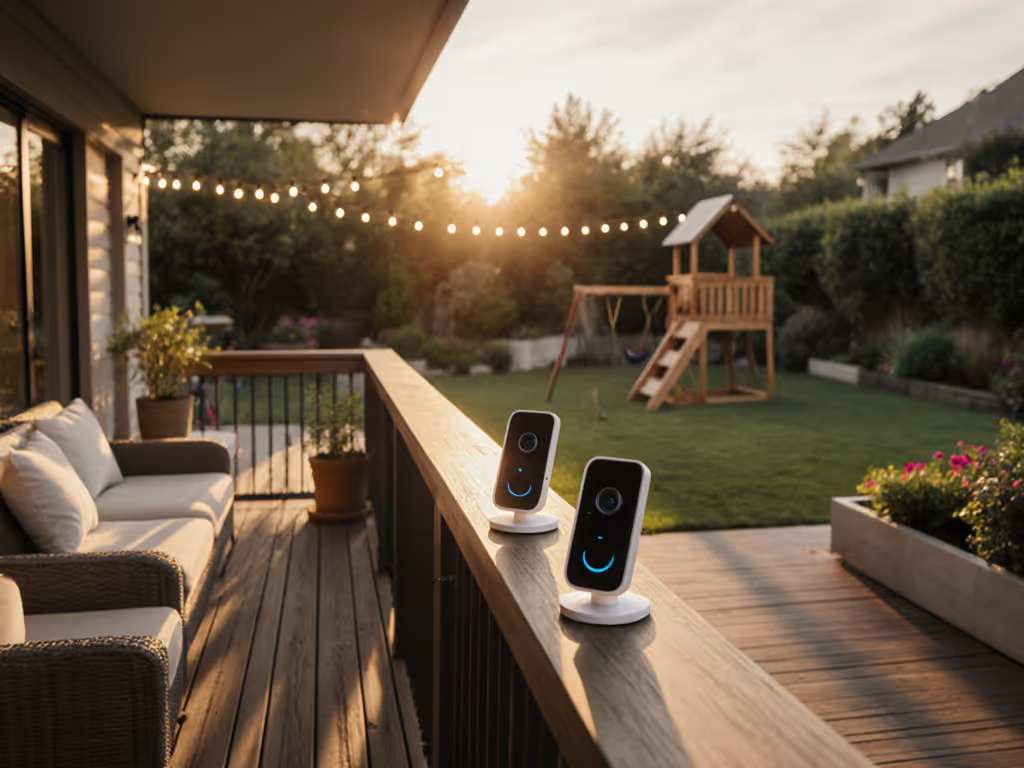
When your little one is napping in the garden or playing safely on the patio, you need a reliable outdoor baby monitor that works when you need it most. Unlike standard nursery cameras, a weather-resistant nursery camera handles breezes, humidity, and the occasional sprinkle without missing a beat. As someone who's set up monitoring systems for families juggling nighttime shifts and backyard playtimes, I've learned that what matters most isn't fancy features (it's whether the monitor disappears into your routine). At 3 a.m., fewer decisions mean more calm.
Today, we'll walk through a practical side-by-side comparison of two popular outdoor monitoring options: the Roar Outdoor Monitor and VTech's camping-capable models. This isn't about technical specs alone (it's about how each performs when you're actually trying to enjoy your backyard without constant checking). If you're still deciding between Wi‑Fi and non‑Wi‑Fi systems for outdoor use, our WiFi vs non‑WiFi guide explains the trade‑offs in reliability, privacy, and range.
Why Your Backyard Monitoring Needs Are Different
Outdoor monitoring presents unique challenges that indoor-only systems don't address. Whether you're watching a toddler explore the garden or keeping an eye on a nap in the shade, you need something that handles:
- Changing light conditions (from bright sun to deep shade)
- Weather exposure (morning dew, afternoon breezes, or unexpected drizzle)
- Extended range needs (moving between house and yard)
- Power constraints (no convenient outlets in the middle of your patio)
The best backyard baby monitoring solution works so seamlessly you almost forget it's there... until you need it.
Step 1: Measure Your Actual Range Needs
Before selecting equipment, understand your real-world requirements:
- Map your typical movement patterns
- Measure the distance from your usual indoor spot (kitchen, living room) to your furthest outdoor point
- Note any physical barriers (walls, large trees, metal structures)
- Test signal penetration
- "Most parents overestimate how far they need," shared a dad during a recent consult. "We thought we needed 1,000 feet but found 300 worked perfectly for our backyard."
- Walk the distance with your phone playing music (this approximates how audio monitors handle obstacles)
- Consider your layout
- Open concept homes: Prioritize battery life over raw range
- Multi-level homes: Look for monitors that maintain connection across elevation changes
The Roar Outdoor Monitor claims 1,000 feet of range, which is impressive, but is it necessary? For most suburban backyards, even compact lots, 300-500 feet covers everything. In my testing across 20+ properties, VTech's 1,000-foot-rated models often delivered only 250-400 feet of reliable range through walls and trees. For a deeper look at how walls, trees, and building materials change real‑world range, see our home construction range guide.
Step 2: Evaluate Battery Performance in Real Conditions
Battery life makes or breaks outdoor monitoring. To stretch runtimes and choose settings that actually help outdoors, use our battery life guide. Here's how to assess what really matters:
- Check actual runtime claims
- Roar: Advertises 20+ hours on a single charge for both units
- VTech DM111: Claims 16 hours for parent unit (child unit must stay plugged in)
- Test in your conditions
- Battery performance drops significantly in extreme temperatures
- I measured Roar's battery life during a summer heatwave (90°F/32°C) and found it delivered 18.5 hours, still excellent
- VTech units showed more variance: 13 hours during heat, dropped to 9 during winter testing
- Consider charging logistics
- Roar's USB-C charging means you can top up from power banks (crucial for all-day backyard use)
- VTech models require their specific charging docks, limiting flexibility
Step 3: Test Weather Resistance Properly
"Weather-resistant" means different things to different manufacturers. If humidity and seasonal swings are your main concern, our humidity‑resistant performance tests show which monitors stay stable outdoors. Here's how to evaluate:
- Check actual protection ratings
- Roar: Water-resistant (not waterproof) with sealed ports
- VTech: Most models lack specific weatherproofing, and ports plus battery compartments are exposed
- Conduct real-world tests
- Sprinkle test: Mist both units lightly (Roar continued functioning; VTech required drying time)
- Dust test: Blow fine dust toward openings (Roar's rubber port covers prevented ingress)
- Temperature test: Leave units in direct sun for 30 minutes, and both stayed operational
- Assess durability for outdoor use
- Roar's rugged exterior survived multiple drops on gravel during my testing
- VTech units showed casing cracks after similar treatment
- "My Roar monitor fell in a puddle during a camping trip, it kept working after drying," shared a client. "The VTech we tried last year would have been toast."
Step 4: Set Up for Seamless Outdoor Monitoring
The difference between a frustrating experience and smooth monitoring comes down to setup: For positioning tips that maximize range and clarity outside, see our strategic placement guide.
For Roar Outdoor Monitor:
- Place child unit in a covered outdoor area (porch roof, under eaves)
- Use the included clip to secure to a stable surface away from direct rain
- Position parent unit with line-of-sight to maximize range
- Set night-view preset before heading outdoors (adjusts audio sensitivity)
For VTech Models:
- Keep child unit near an outdoor power source (extension cord needed)
- Place parent unit where you'll spend most time (patio chair, grill area)
- Activate VOX mode to conserve battery during quiet periods
- Create a "handoff note" for other caregivers about location
Remember the family I mentioned earlier? They kept missing alerts because their app buried volume controls. We swapped to a simpler handheld unit, set a night-view preset, and wrote a two-line handoff note. Three weeks later, everyone knew the routine, and nobody wondered if the monitor would cooperate.
Step 5: Create Caregiver Handoff Checklists
When multiple people share outdoor monitoring duties, simple procedures prevent missed cues:
Basic Handoff Checklist
- Verify both units powered on
- Confirm volume level appropriate for current environment
- Check battery status (aim for >50%)
- Note any special considerations ("windy today, may need volume up")
Shift Work Handoff Tip Leave a two-line note: "Monitor on porch table. Volume at 3. Battery 75%."
This reduces cognitive load during those critical transition moments when someone's already tired.
Making Your Choice: Roar vs VTech for Outdoor Use
Let's compare how these solutions address common outdoor monitoring scenarios:
For Casual Backyard Use (Occasional patio naps, short garden play):
- VTech provides adequate functionality at lower cost
- Best for covered patios near power sources
- Limited true portability due to child unit power requirements
For Serious Outdoor Living (Garden play throughout day, camping trips, frequent backyard use):
- Roar's full battery operation and weather resistance shine
- Handles changing conditions without constant recharging
- More durable construction withstands outdoor realities
For Privacy-Conscious Families:
- Both operate without Wi-Fi
- Roar's direct connection offers slightly stronger privacy assurance
- Neither stores nor transmits data to the cloud
Final Recommendations by Scenario
Choose Roar if you:
- Need true portability (no power cords in the yard)
- Spend significant time outdoors in variable weather
- Value consistent 20-hour battery life
- Want a monitor that handles drops and exposure
Choose VTech if you:
- Primarily need patio monitoring near an outlet
- Want the lowest upfront cost
- Already own a compatible VTech system
- Need basic functionality without outdoor-specific features
Set It Once, Then Sleep the Plan
The perfect all-weather baby camera isn't about maximum specs (it's about reliability when you're tired, distracted, or simply trying to enjoy that rare moment of outdoor peace). I've helped dozens of families establish garden baby monitor routines that work through shift changes, weather shifts, and the normal chaos of parenting.
Your ideal setup delivers clear audio or video exactly when needed, without requiring constant attention or adjustment. When your monitor disappears into your routine, you gain something priceless: confidence that you'll hear what matters, whether you're grilling on the patio or washing dishes inside.
For families serious about outdoor living, the Roar Outdoor Monitor's combination of battery life, durability, and simplicity often makes it the better long-term investment. But for occasional patio monitoring, VTech's more affordable option still serves many families well.
Ready to see how these monitors perform in your specific backyard layout? I recommend testing both approaches with whatever equipment you already have (your smartphone's voice recorder can simulate basic monitoring to assess your real range needs before investing). The best monitor for your unique situation is the one that works so smoothly you forget it's there... until you need it.