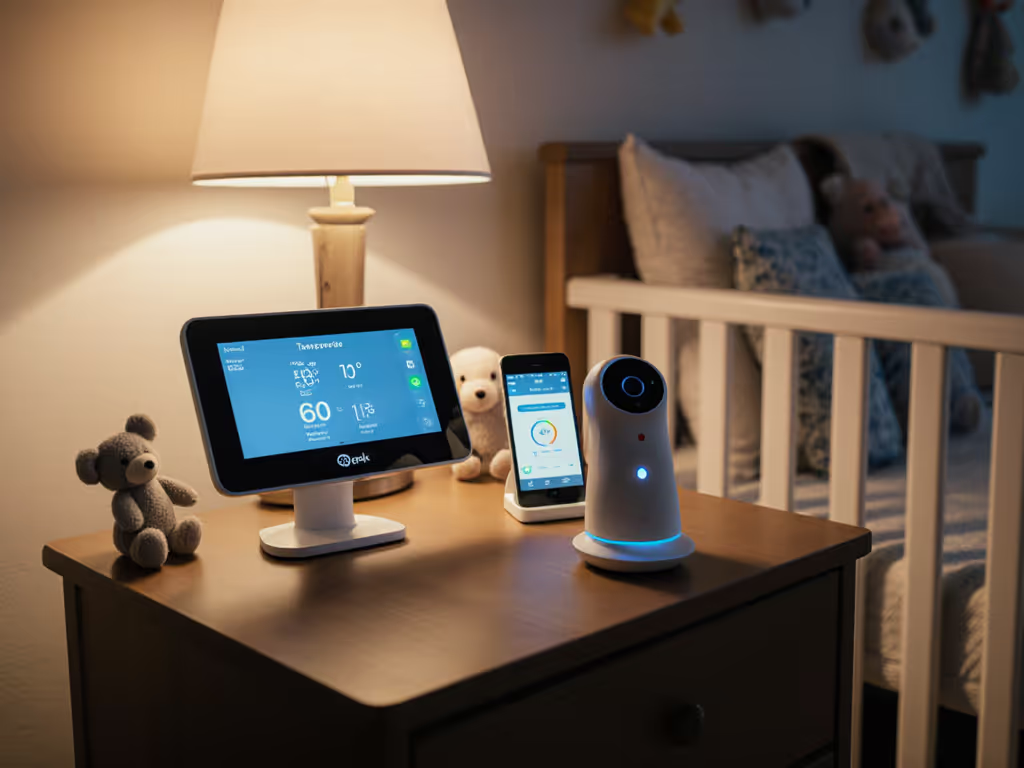
Wall vs Battery Baby Monitors: Safety and Reliability Compared
By Hana Ito • 9th Dec
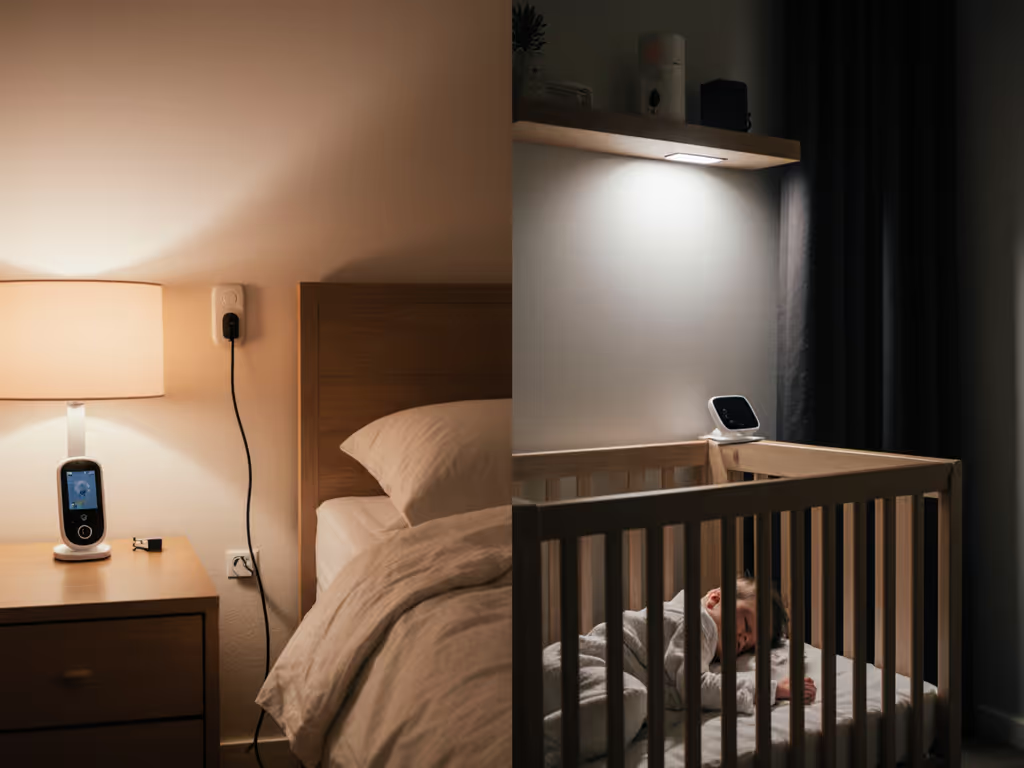
When you're navigating sleep training with a newborn while juggling shift work, the last thing you need is monitor anxiety at 3 a.m. The right choice between wall-powered vs battery baby monitors could mean the difference between restful nights and constant worry. This baby monitor power source comparison isn't just about technical specs, it's about creating a system that integrates seamlessly into your family's rhythm. At 3 a.m., fewer decisions mean more calm. As someone who's set up monitoring systems for families in every living situation, from tiny city apartments to multi-story homes, I've seen how the right power solution becomes invisible in your routine, exactly as it should be.
Understanding Power Options for Peace of Mind
Let's break down the fundamental choices with plain steps that consider your actual home layout and nighttime needs. Wall-powered cameras (plugged directly into an outlet) offer consistent reliability, but they require thoughtful cord placement. Battery-powered options provide flexibility, but they introduce new considerations around charging cycles and outage preparedness.
Wall-powered monitors dominate the market for good reason. They're "always on" without charging anxiety, making them ideal for primary nursery monitoring. However, thoughtful installation is crucial for cord safety baby monitors. Keep cables high and out of reach with included mounts or adhesive clips. The Nanit Pro Smart Baby Monitor exemplifies this approach with its wall-mount system designed specifically for safe cable management away from crib areas.
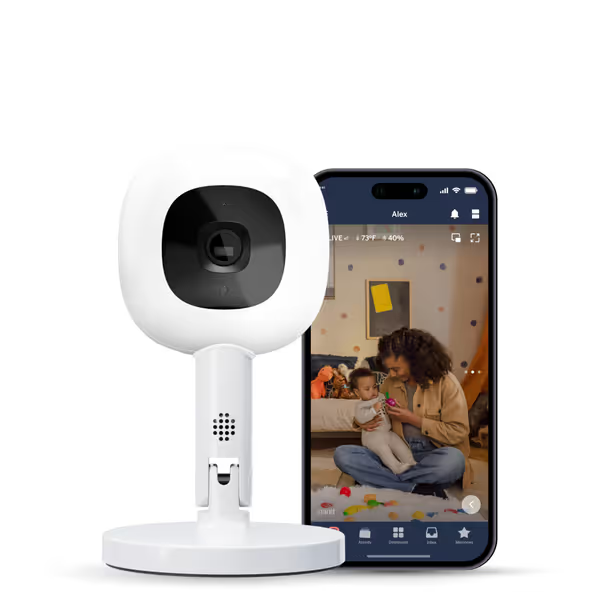
Nanit Pro Smart Baby Monitor
Privacy-focused 1080p Wi-Fi monitor with sleep tracking for peace of mind.
$167.66
Video Quality1080p HD
Video Quality1080p HD
Pros
Clear 1080p HD video and reliable connectivity.
Sensor-free sleep and breathing motion tracking.
256-bit AES encryption & 2-factor authentication.
Cons
Reports of functionality issues within 6 months.
Customers find the baby monitor's camera quality excellent, with clear video and good connectivity, and appreciate its ease of use with a user-friendly app. However, the functionality receives mixed feedback, with several customers reporting it stops working after less than 6 months. Moreover, customers express concerns about connectivity issues, sturdiness, and camera stability, noting the stand is flimsy and the camera frequently falls off. Additionally, customers consider the product expensive and not worth the money.
Customers find the baby monitor's camera quality excellent, with clear video and good connectivity, and appreciate its ease of use with a user-friendly app. However, the functionality receives mixed feedback, with several customers reporting it stops working after less than 6 months. Moreover, customers express concerns about connectivity issues, sturdiness, and camera stability, noting the stand is flimsy and the camera frequently falls off. Additionally, customers consider the product expensive and not worth the money.
Battery-powered cameras shine when portability matters (think travel, monitoring in multiple rooms, or temporary setups). But battery life varies dramatically: some last 5-6 hours on night vision, others stretch to 12+ hours in power-saving modes. For real-world runtimes and charging tips, see our battery life guide. The "battery backup monitoring" question becomes critical here: if your home loses power, will your monitor keep functioning? Some systems like the Babysense Full HD model include substantial batteries (20+ hours in eco mode) specifically designed to bridge short outages while maintaining clear night vision.
Real Reliability Factors Beyond the Spec Sheet
Technical specifications rarely tell the full story of how a monitor performs in your actual home. Let's examine what truly matters when the lights go out and everyone's tired.
Battery Life Reality Check
Most manufacturers advertise ideal conditions that don't reflect real nighttime use. When evaluating battery claims, ask:
- Does this include night vision usage? (IR lighting drains batteries faster)
- What's the actual runtime in sound-activated mode?
- How does temperature affect performance?
I've seen many parents surprised when their "12-hour battery" monitor dies after 6 hours because it was constantly triggering on household sounds. Creating a simple pre-bed checklist solves this: "Charge monitor nightly, test battery indicator, position away from AC vents."
Power Outage Preparedness
A true power outage baby monitor solution requires thoughtful planning. If overnight endurance is your priority, check our overnight-reliable picks. Wall-powered cameras go dark immediately during outages unless you have a UPS (uninterruptible power supply). Battery-powered cameras become your frontline defense, but only if they're actually charged and in range. Smart systems like the eufy Security Baby Monitor E21 solve this with dual power options: plug it in normally, but during outages it seamlessly switches to its 5,000mAh internal battery.
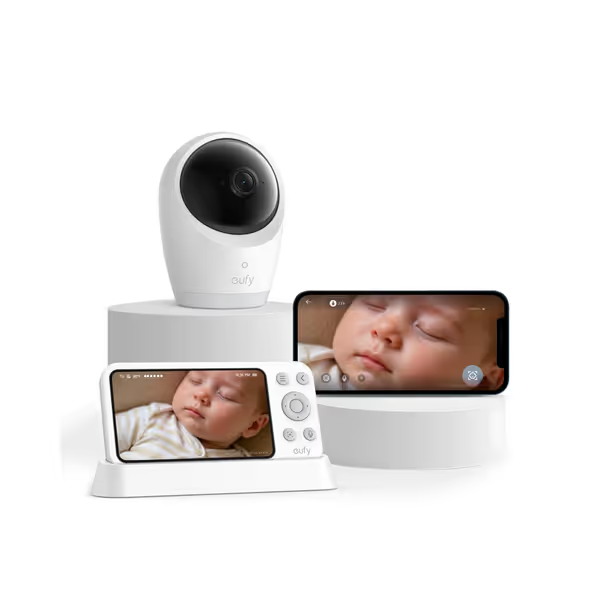
eufy Security Baby Monitor E21
Hybrid 4K monitor for ultimate privacy and reliable connection anywhere.
$199.99
Resolution4K UHD Camera
Resolution4K UHD Camera
Pros
Crystal-clear 4K video, even in total darkness.
Dual-mode (Wi-Fi/No Wi-Fi) for privacy & flexibility.
Portable camera with 5,000mAh built-in battery.
Cons
Mixed feedback on connectivity and motion detection reliability.
Customers praise the baby monitor's crystal clear picture quality, particularly its ultra-clear night view, and appreciate its simple setup and intuitive app. The camera features a built-in battery, and customers find it easy to use. However, connectivity and functionality receive mixed feedback - while some report strong WiFi signals, others experience connection issues, and while the camera and app work great for some, others find it unreliable. Sound quality and motion detection also get mixed reviews, with some finding the sound amazing while others say it's not loud enough, and several customers report issues with motion detection not working properly.
Customers praise the baby monitor's crystal clear picture quality, particularly its ultra-clear night view, and appreciate its simple setup and intuitive app. The camera features a built-in battery, and customers find it easy to use. However, connectivity and functionality receive mixed feedback - while some report strong WiFi signals, others experience connection issues, and while the camera and app work great for some, others find it unreliable. Sound quality and motion detection also get mixed reviews, with some finding the sound amazing while others say it's not loud enough, and several customers report issues with motion detection not working properly.
Cord Safety Made Simple
Nursery safety guidelines consistently emphasize keeping cords away from sleeping areas. Rather than weaving cables through dangerous paths, consider these safer approaches:
- Use ceiling mounts instead of wall outlets near the crib
- Employ cord shorteners or retractors
- Choose systems with minimal cable runs (some cameras mount directly to outlets)
Night vision should feel like looking through a clean window on a moonlit night, clear enough to see breathing movements without IR glare washing out features.
Making the Right Choice for Your Specific Home
Your housing layout dramatically impacts which power solution works best. Let's match options to real-life scenarios rather than generic recommendations.
Apartment & Condo Considerations
In dense living spaces with multiple Wi-Fi networks causing interference, wall-powered monitors often provide more stable connections than battery-operated alternatives that might struggle with signal penetration. The consistent power supply helps maintain strong FHSS (Frequency Hopping Spread Spectrum) connections that cut through apartment building interference better than Wi-Fi-dependent systems.
For renters concerned about drilling, look for systems like the Babysense Full HD that offer secure tabletop placement without compromising night vision quality. These systems typically include both wall-mount hardware (for owners) and non-marking adhesive options (for renters), giving you flexibility without safety compromises.
Houses with Multiple Floors
Here's where battery anxiety often strikes hardest. If your nursery sits on the second floor while you sleep downstairs, wall-powered parent units become essential. Systems like the VTech RM7764-2HD solve this with dual power options: cameras plug in while parent units run on long-life batteries specifically engineered for all-night monitoring.
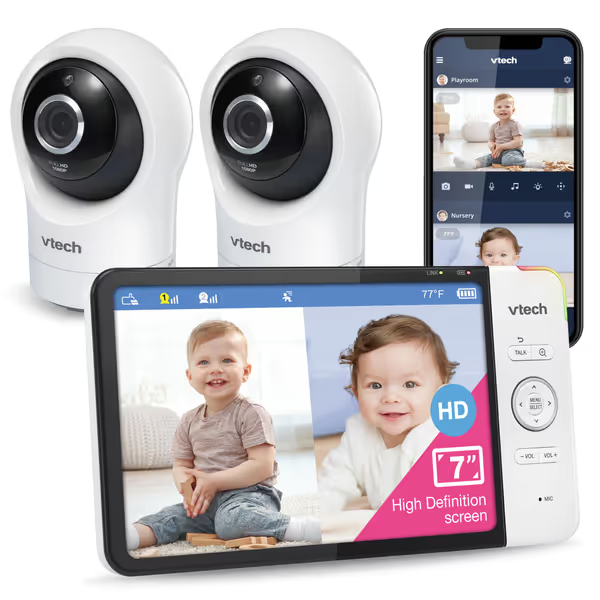
VTech RM7764-2HD Smart WiFi 2 Camera BabyMonitor
Privacy-first monitor with 360° view, HD video, and local/remote access.
$229.95
Display7” HD Parent Unit
Display7” HD Parent Unit
Pros
Dual 1080p/720p HD viewing for clear detail.
No-fee app for flexible local and remote access.
360° pan/tilt, 10X zoom for full room coverage.
Cons
Mixed reports on connectivity & sound quality.
Customers find the baby monitor to be a high-quality device with good picture and night vision, and consider it good value for money. However, the functionality and connectivity receive mixed reviews, with some saying it works well while others report it stops working and has connection issues. The sound quality is also mixed, with some finding it awful while others appreciate the ability to play white noise. Battery life is a concern, with customers reporting it doesn't last an hour.
Customers find the baby monitor to be a high-quality device with good picture and night vision, and consider it good value for money. However, the functionality and connectivity receive mixed reviews, with some saying it works well while others report it stops working and has connection issues. The sound quality is also mixed, with some finding it awful while others appreciate the ability to play white noise. Battery life is a concern, with customers reporting it doesn't last an hour.
Consider creating a simple handoff checklist for caregivers:
- "Charge parent unit nightly - indicator light should be solid green"
- "Test volume in crib room before shift change"
- "Confirm night vision clarity with one finger test (can you see fingerprint details?)"
This plain-step approach prevents the exact scenario I saw with a nurse couple I worked with (they kept missing alerts because their app buried volume controls during shift changes). We switched to a simpler handheld unit with physical volume buttons, set a night-view preset, and created a two-line handoff note. Three weeks later, everyone knew the routine, and nobody wondered if the monitor would cooperate.
Creating Your Night-Ready Routine
The most reliable system is the one that integrates effortlessly into your existing routines. Rather than adapting your life to the technology, choose a monitor that works within your natural flow.
Start with this simple home assessment: If your walls are thick or framed with metal, consult our home construction range guide to pick the right tech.
- Walk the path from your sleeping area to the nursery
- Note any signal obstacles (thick walls, metal framing)
- Identify safe power sources near ideal camera positions
Then select your power solution based on these practical realities rather than marketing claims. For most families I've worked with, a hybrid approach works best: wall-powered nursery camera for primary monitoring plus a portable battery unit for travel or backup.
Remember, the best monitor is the one you forget about at 3 a.m. because it simply works within your routine.
When testing potential monitors, focus on these practical night-ready features:
- One-touch volume adjustment (no buried menus)
- Clear night vision at actual crib distance
- Physical battery indicator lights
- Simple power failure notification
Finding Your Perfect Power Match
Choosing between wall-powered and battery-operated baby monitors ultimately comes down to matching technology to your specific home rhythm, not chasing the most features. The right system should disappear into your nighttime routine, providing confidence without cognitive load.
As you evaluate options, ask yourself: "Will this work reliably when I'm most exhausted?" rather than "What features does this have?" Prioritize simplicity, safety, and seamless integration with your existing routines. Your nighttime peace of mind depends not on the most advanced technology, but on the most dependable system for your unique family needs.
Explore how different power solutions perform in real homes with our detailed comparison guide, they've tested these monitors in layouts just like yours, with transparent results about what actually works when you need it most.
Related Articles