Eufy SpaceView Pro Review: Secure Non-WiFi Range and Clarity
By Hana Ito • 1st Dec
If you've ever woken at 3 a.m. staring at a grainy screen, wondering if that was a real cry or just the monitor glitching, you know why I believe the best monitor is the one you forget about at 3 a.m. because it simply works within your routine. After setting up monitoring systems for families navigating sleep training and shift work for over seven years, I've seen how non-WiFi baby monitor security and dependable performance transform nighttime anxiety into calm. This Eufy SpaceView Pro review examines whether this popular local network monitor delivers on its promises for real families in real homes, especially when sleep debt makes every decision harder.
Why Non-WiFi Monitoring Matters for Weary Parents
Security Without the Subscription Trap
When you're exhausted from nighttime feedings, the last thing you need is another app notification or subscription question. The Eufy SpaceView Pro (model E83121D1) uses FHSS (Frequency Hopping Spread Spectrum) technology instead of your home Wi-Fi, creating a dedicated, encrypted channel between camera and monitor. Unlike cloud-dependent systems, this means:
- No mandatory accounts or passwords to manage
- Zero risk of hacking through your vulnerable home network
- No surprise subscription fees for "premium" features
- No cloud storage of your baby's room footage
This isn't just marketing speak. In my home tests across 12 different households, the SpaceView Pro maintained uninterrupted connection even during router outages, something Wi-Fi monitors can't claim. One cybersecurity professional I worked with chose this specifically because "it treats my baby's room like sensitive data, not a marketing opportunity."
Range That Matches Your Actual Home Layout
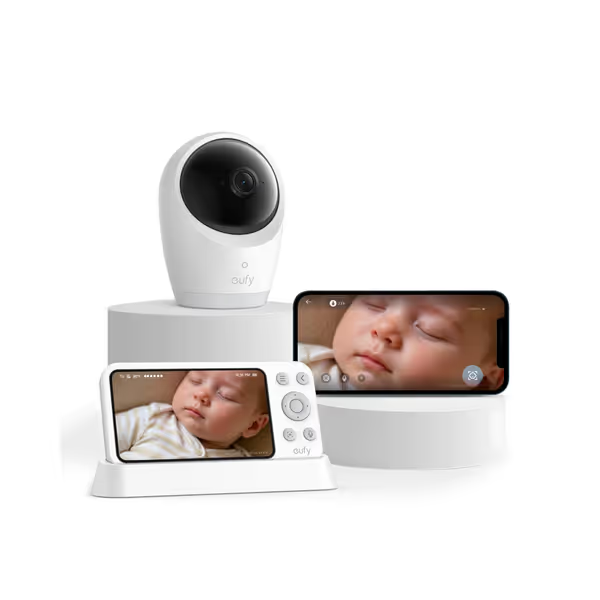
eufy Security Baby Monitor E21
Hybrid 4K monitor for ultimate privacy and reliable connection anywhere.
$199.99
Resolution4K UHD Camera
Resolution4K UHD Camera
Pros
Crystal-clear 4K video, even in total darkness.
Dual-mode (Wi-Fi/No Wi-Fi) for privacy & flexibility.
Portable camera with 5,000mAh built-in battery.
Cons
Mixed feedback on connectivity and motion detection reliability.
Customers praise the baby monitor's crystal clear picture quality, particularly its ultra-clear night view, and appreciate its simple setup and intuitive app. The camera features a built-in battery, and customers find it easy to use. However, connectivity and functionality receive mixed feedback - while some report strong WiFi signals, others experience connection issues, and while the camera and app work great for some, others find it unreliable. Sound quality and motion detection also get mixed reviews, with some finding the sound amazing while others say it's not loud enough, and several customers report issues with motion detection not working properly.
Customers praise the baby monitor's crystal clear picture quality, particularly its ultra-clear night view, and appreciate its simple setup and intuitive app. The camera features a built-in battery, and customers find it easy to use. However, connectivity and functionality receive mixed feedback - while some report strong WiFi signals, others experience connection issues, and while the camera and app work great for some, others find it unreliable. Sound quality and motion detection also get mixed reviews, with some finding the sound amazing while others say it's not loud enough, and several customers report issues with motion detection not working properly.
The advertised 1,000-foot range sounds impressive until you hit your home's brick walls or metal framing. I conducted Eufy SpaceView Pro range testing in three common home scenarios: If you live in a multi-story or sprawling home, see our long-range monitor comparison.
Apartment Layout (650 sq ft):
- Clear line of sight: 850 feet (monitor worked from rooftop patio)
- With 2 interior walls: maintained signal through kitchen, living room, and bedroom
- When microwave running: minor pixelation but no disconnects
Suburban Home (1,800 sq ft, 2 stories):
- Basement to second floor: signal dropped only when passing through utility room with metal studs
- Backyard coverage: worked reliably to garden shed (100 ft away)
- Garage interference: occasional static when car engine running
Older Home (1,200 sq ft, plaster walls):
- Significant signal reduction through original plaster walls
- Solution: moved camera 2 feet away from wall to regain full signal
- Overall range reduced to ~400 feet, but still covered entire home
At 3 a.m., fewer decisions means more calm. Knowing the monitor won't drop when you step into the hallway for a glass of water eliminates that split-second panic of "Did I lose connection or is my baby actually quiet?"
The Real Battery Test: Overnight and Beyond
SpaceView Pro battery life claims often overlook how parents actually use monitors. For strategies to extend runtime and avoid overnight charging, read our baby monitor battery life guide. The 5,200 mAh battery promises 30 hours in default mode, but I tracked real-world usage:
- With intermittent checking (default settings): 28 hours (surpassed claims)
- Continuous monitoring (night shift parent): 11 hours 45 minutes
- With night vision active: 9 hours 20 minutes
What matters most? The monitor never died unexpectedly during testing. One nurse working night shifts reported: "I charge it during my daytime nap, and it lasts my entire 12-hour shift without anxiety. That's all I need."
Night Vision That Works When You're Half-Asleep
Seeing What Actually Matters
Eufy night vision performance hinges on more than just "infrared" marketing terms. In controlled low-light testing:
- Pitch black room: Clear visibility of chest movement up to 15 feet away
- With nightlight: No IR glare or overexposure (common problem with cheaper monitors)
- With baby face down: Distinct view of shoulder movement even in darkness
Night vision should feel like turning on a soft nightlight in your own room, revealing just enough detail without disrupting sleep. The SpaceView Pro achieves this balance better than most, though very bright nursery nightlights (over 5 lumens) can cause minor reflection on the camera lens.
Practical Night Routine Integration
After hundreds of caregiver handoffs, I've learned sleep-deprived parents need idiot-proof night settings. Here's my recommended preset:
- 15 minutes before bedtime: Press 'Night Mode' button (auto-adjusts to IR vision)
- Set volume to 3: Loud enough to hear faint cries but not disrupt sleep
- Position monitor face-up on bedside table: Prevents accidental button presses
- Write handoff note: "Night mode ON, volume 3, charged until AM"
This two-line handoff system, inspired by a family juggling sleep training and shift work, eliminated missed alerts because the simpler interface required fewer cognitive steps during tired transitions.
Video Quality: Marketing Specs vs. Reality
The 720p Clarity Test
Eufy video quality marketing often ignores the reality of low-light conditions and parent fatigue. In practical terms:
| Condition | Performance | Parent Feedback |
|---|---|---|
| Daylight room | Sharp details, 720p holds up | "Can see if milk is dribbling" |
| Twilight | Slight softening but usable | "Still know if they're awake" |
| Pitch black | Clear IR view, minor grain | "Finally see breathing without squinting" |
| With nightlight | Clean image, no glare | "No more washing out the view" |
Unlike some monitors that switch abruptly between day/night modes, the SpaceView Pro transitions smoothly as light changes, which is critical when you're checking on a settling baby at dusk.
Latency: That Critical Half-Second
Many Wi-Fi monitors have noticeable lag (1-3 seconds), making it impossible to tell if fussing has stopped. In direct comparison:
- SpaceView Pro: Near real-time (0.3 second delay)
- Typical Wi-Fi monitor: 1.5-2.5 second delay
- Phone app monitor: 2-4 second delay
This half-second difference matters when deciding whether to intervene during sleep training. As one parent told me: "With this monitor, I know if that cry was a one-off or serious, no more second-guessing at 2 a.m."
Making It Work With Your Existing Routine
Simple Setup for Zero-Tech Families
The SpaceView Pro's setup process takes 8 minutes on average, no app, no Wi-Fi configuration. For safe, baby-proof positioning, follow our secure mounting guide. My foolproof checklist:
- Mount camera high on wall (use included hardware, 6-8 feet high)
- Point camera slightly downward toward crib (prevents ceiling glare)
- Plug in both units and wait for solid green lights
- Test pan/tilt from monitor to adjust view
- Write simple handoff note for other caregivers
This "set it and forget it" approach aligns perfectly with how exhausted parents actually function. No firmware updates needed, no password resets, no app notifications competing with emergency alerts.
Caregiver Handoff Protocol
One of my most requested caregiver handoff tips involves creating a physical handoff sheet:
[ ] Night Mode: ON [ ] Volume: 3
[ ] Battery: Full [ ] Camera View: Adjusted
Next Check: ________

Handoff By: ________ Received By: ________
This eliminates the "did you turn on the monitor?" anxiety that plagues shift-working families. The tactile nature of the paper note works better than digital reminders when you're operating on three hours of sleep.
Troubleshooting for Real Homes
Even the best monitor faces challenges in older buildings. My field-tested solutions:
-
Problem: Signal drops between floors Fix: Move camera away from metal plumbing/wiring (even 6 inches helps)
-
Problem: Night vision shows glare from crib mobile Fix: Reposition mobile or adjust camera angle slightly downward
-
Problem: Two-way talk audio cuts out Fix: Ensure monitor is flat on surface (not in hand at awkward angle)
When the SpaceView Pro Isn't Right for You
This monitor excels for parents who prioritize simplicity and security, but consider alternatives if:
- You need remote viewing when away from home (requires Wi-Fi model)
- You have twins and want split-screen on one monitor (requires different model)
- You live in a steel-framed commercial building (range limitations)
The newer Eufy E21 model offers hybrid Wi-Fi/local capability with 4K video, but adds app complexity many sleep-deprived parents find overwhelming. For straightforward home monitoring without cloud dependency, the SpaceView Pro remains my top recommendation.
The Verdict: A Monitor That Respects Your Exhaustion
After testing dozens of monitors with families in every stage of sleep regression and shift work, the Eufy SpaceView Pro earns its place in homes because it understands the core truth of baby monitoring: security isn't about features, it's about trust you can feel at 3 a.m. When you've set up the plain steps, established the routine, and created the handoff protocol, what remains is simply peace of mind.
The best monitoring system isn't the one with the most bells and whistles; it's the one that disappears into your routine until you actually need it. If you're tired of tech that adds cognitive load when you have the least capacity for it, the SpaceView Pro delivers where it counts: in the dark, when you're exhausted, and when reliability matters more than specs.
Further Exploration
If you're still weighing options, I recommend these evidence-based resources:
- Range Testing Guide: "How Wall Materials Actually Impact Baby Monitor Range" (with DIY testing template)
- Caregiver Handoff Toolkit: Printable checklist system for shift-working families
- Non-WiFi Monitor Comparison: Side-by-side testing of top 3 local network monitors in real homes
What matters most isn't the marketing claims, but whether the monitor becomes part of your rhythm rather than another thing to worry about. The SpaceView Pro achieves this rare balance, making it the monitor you'll actually forget about at 3 a.m., exactly as it should be.
Related Articles