Why Use Monitor With Camera: Complete Guide
By Nora Jensen • 17th Oct
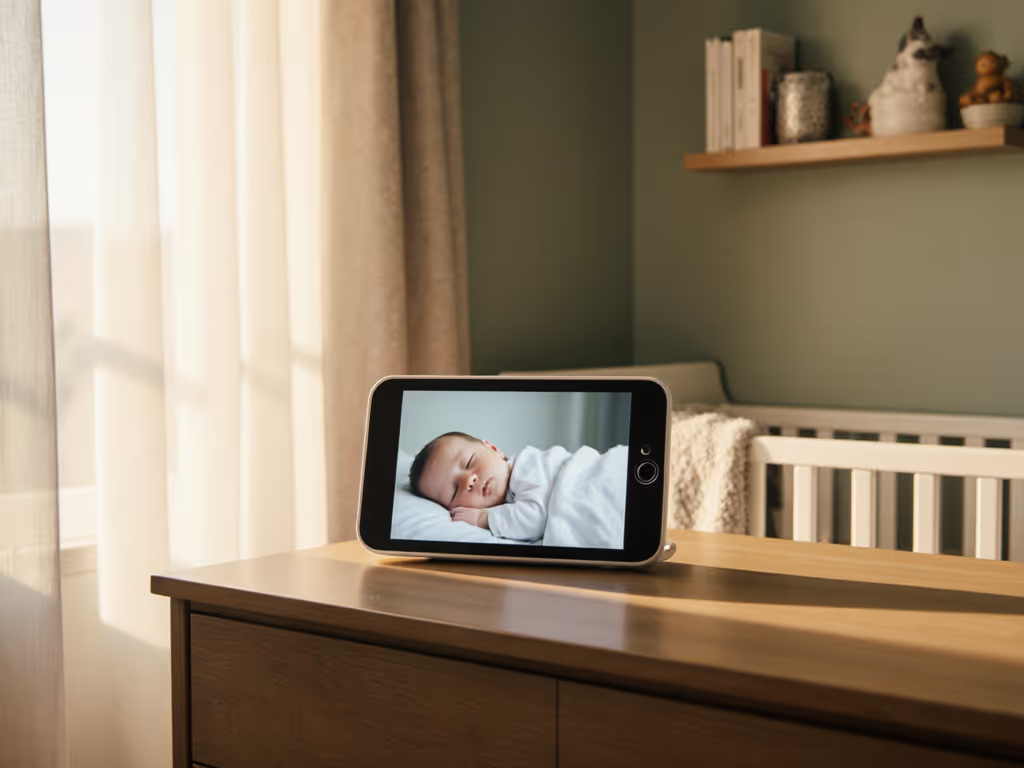
Did you know that over 60 percent of new parents use some form of video monitoring at home for peace of mind? Monitors with cameras are not just for baby nurseries anymore. Professionals use them to fine-tune broadcasts and enhance security in workplaces. Understanding how these devices work, what features they offer, and how they differ from traditional monitors helps families and businesses make smarter choices about their safety and privacy.
Key Takeaways
| Point | Details |
|---|---|
| Integration of Video and Display | Monitors with cameras combine video capture and display functionalities, enhancing real-time visual monitoring in both home and professional environments. |
| Diverse Types and Applications | WiFi, non-WiFi, and smart monitors cater to different monitoring needs, each offering unique benefits and privacy considerations. |
| Privacy and Security Measures | Implementing privacy-by-design and robust data protection mechanisms is essential to ensure user safety and compliance with legal standards. |
| Careful Setup is Crucial | Users must understand local consent laws and security practices to avoid legal complications and ensure effective monitoring solutions. |
What Are Monitors With Cameras?
Monitors with cameras are specialized display devices that integrate video capture and visual monitoring capabilities into a single technological solution. Unlike traditional display screens, these devices combine a camera and screen to provide real-time visual information across different contexts, from home safety monitoring to professional broadcast environments.
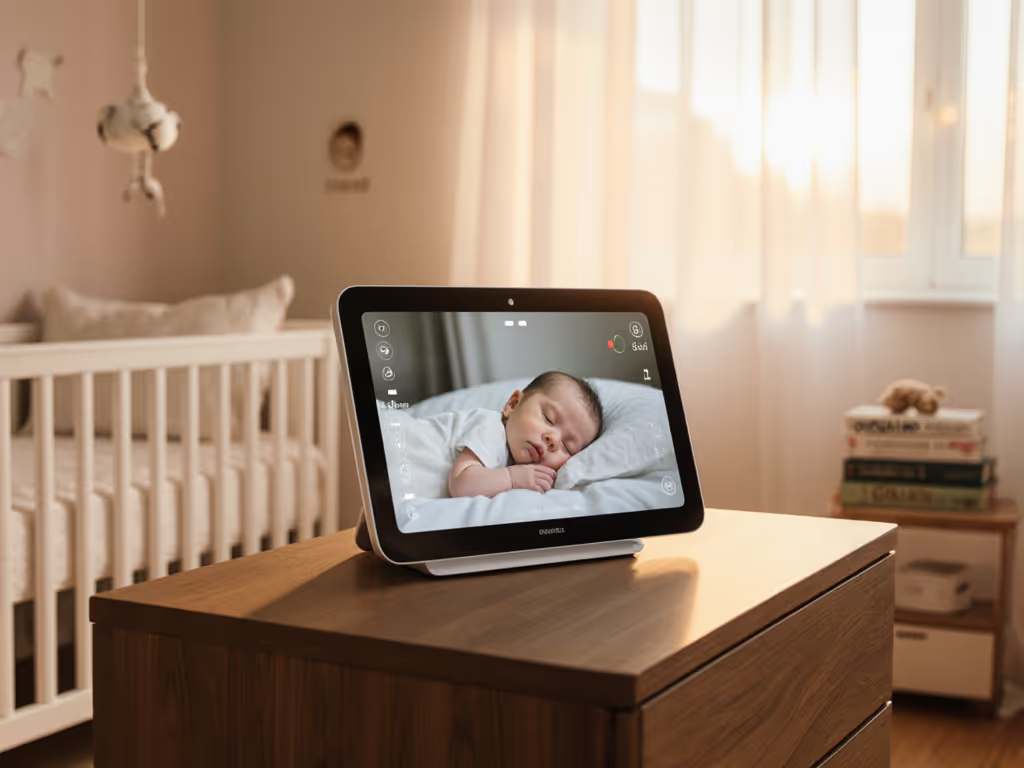
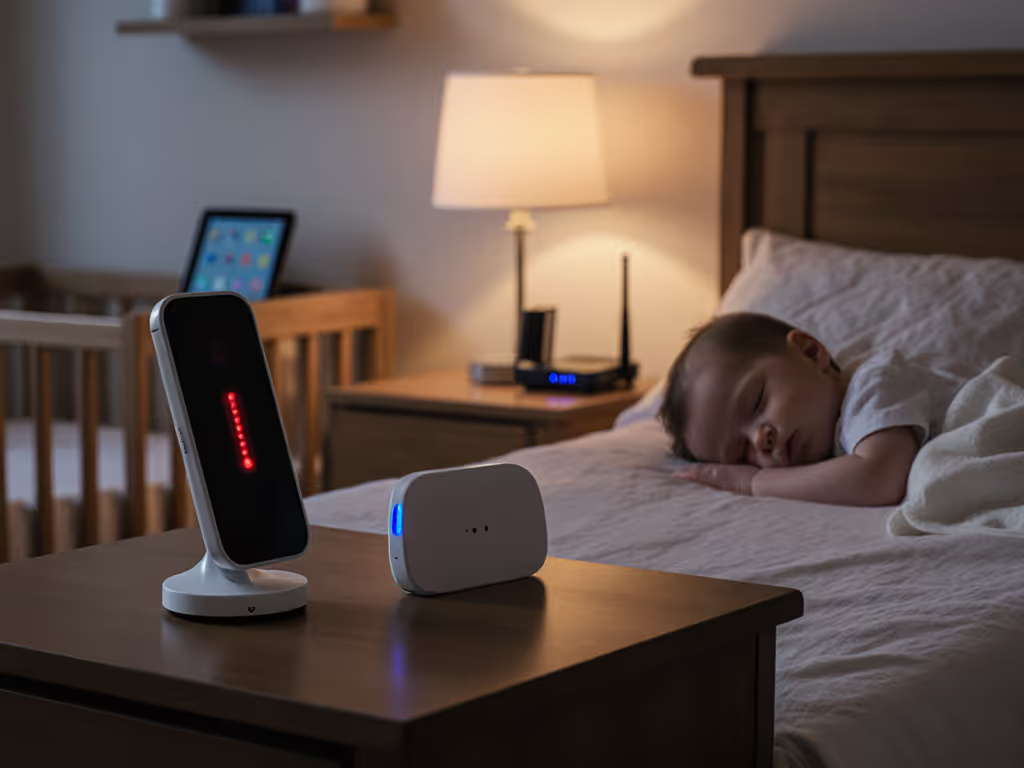
In home settings, baby monitors with cameras represent the most common consumer application. These devices allow parents and caregivers to remotely observe infants and children, providing visual reassurance and safety monitoring through integrated camera and display technology. The camera captures live video feed, which is then transmitted to a dedicated receiver or smartphone app, enabling continuous visual tracking.
Professional environments utilize monitors with cameras differently. Broadcast reference monitors, for instance, are specialized display devices used in video production settings to monitor camera outputs and ensure precise visual quality. These monitors serve critical functions in television studios, film production, and live event broadcasting, where real-time visual verification is essential.
Key characteristics of monitors with cameras typically include:
- High-resolution video capture
- Real-time streaming capabilities
- Night vision functionality
- Wide-angle lens options
- Secure data transmission
- Mobile device compatibility
Whether for parental monitoring or professional video production, monitors with cameras represent a sophisticated intersection of display and imaging technologies, providing unprecedented visual access and monitoring capabilities.
Key Features and How Monitors With Cameras Work
Monitors with cameras function through an intricate system of digital signal processing and network transmission that enables real-time visual monitoring across various environments. At their core, these devices combine video capture technology with display mechanisms, transforming raw visual data into meaningful, accessible information for users.
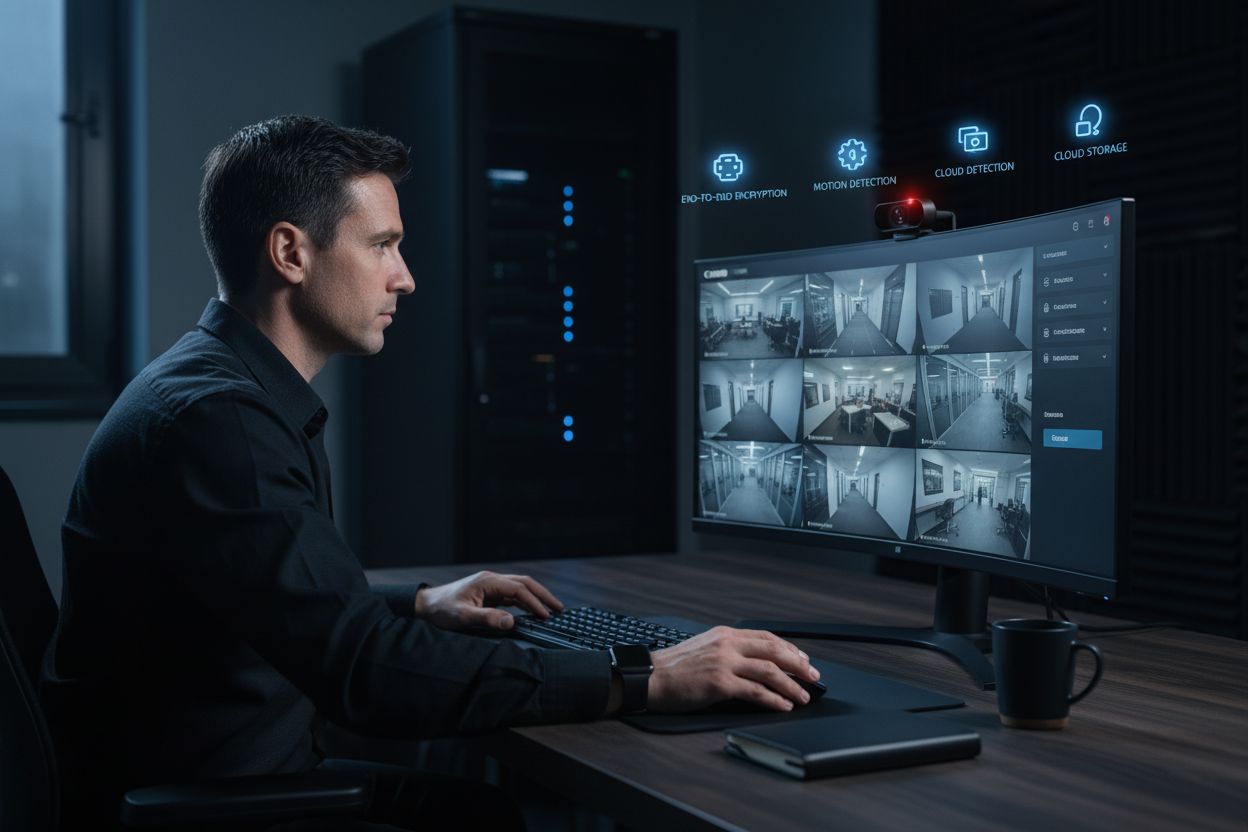
The technical workflow begins with the camera's sensor, which converts optical images into electronic signals. Advanced image sensors capture visual information through sophisticated lens systems that can include features like wide-angle views, infrared night vision, and high-resolution image capture. Professional surveillance and home monitoring systems often integrate AI-powered analytics that can detect specific events, such as human movement or environmental changes, creating intelligent monitoring solutions.
Network connectivity plays a crucial role in modern monitor-camera systems. IP-based transmission allows video signals to be securely sent over local networks or internet connections, enabling remote viewing through smartphones, tablets, or dedicated monitoring stations. This technology reduces traditional surveillance limitations by providing flexible, real-time visual access from virtually anywhere.
Key technological features of modern monitors with cameras include:
- High-definition video resolution (720p to 4K)
- Low-light and infrared imaging capabilities
- Motion detection algorithms
- Encrypted data transmission
- Cloud storage options
- Multi-device synchronization
Whether used for home baby monitoring or professional security applications, these devices represent a sophisticated convergence of optical, digital, and network technologies, transforming how we capture, transmit, and interact with visual information.
Types: WiFi, Non-WiFi, and Smart Monitors
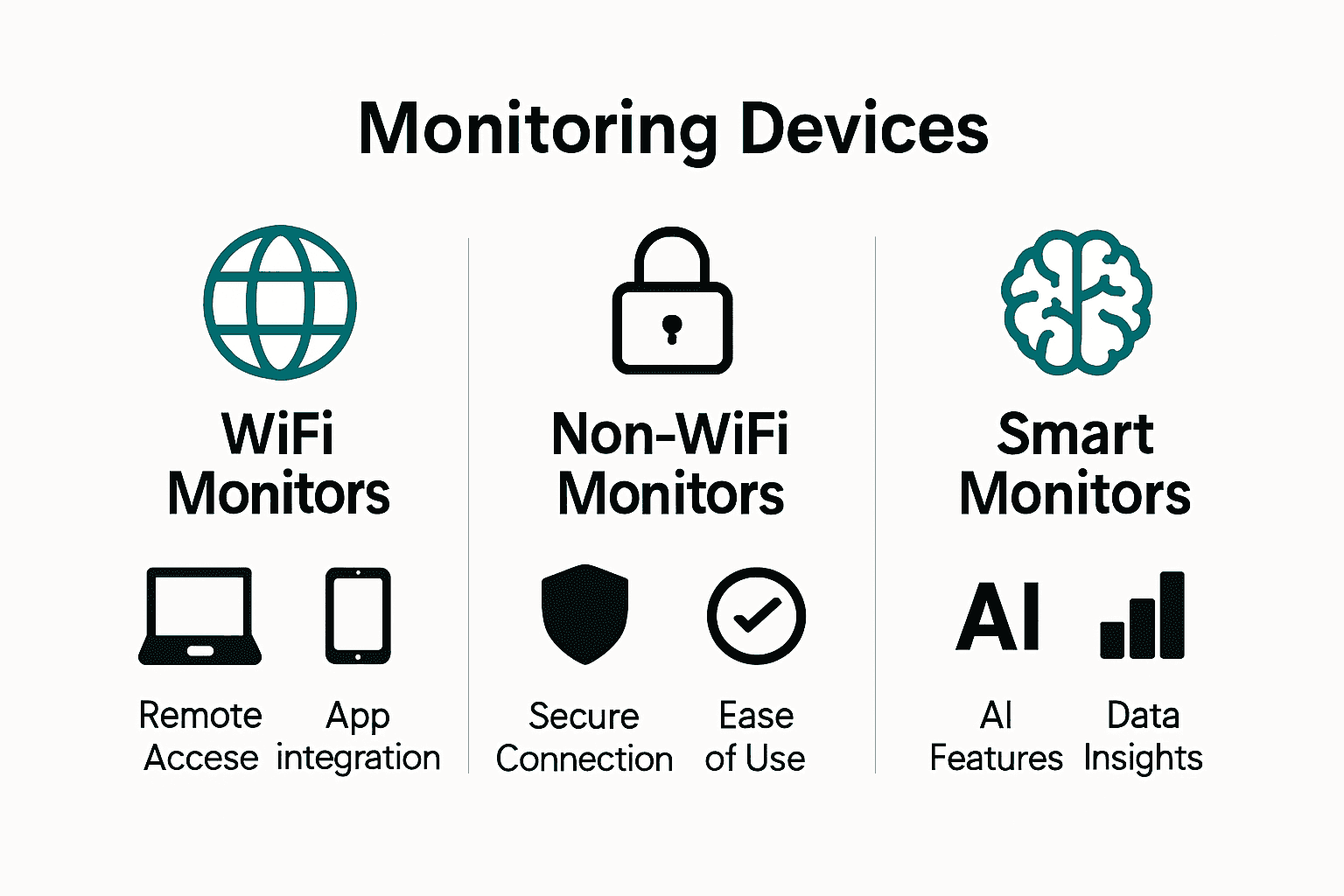
Monitor cameras come in diverse technological configurations, each designed to meet specific monitoring needs and user preferences. Understanding the differences between WiFi, non-WiFi, and smart monitors helps families and professionals select the most appropriate solution for their unique requirements.
WiFi monitors represent the most versatile category, offering seamless connectivity and remote access through internet-enabled devices. These monitors transmit video feeds directly to smartphones, tablets, or computers, allowing users to check on their environment from anywhere with an internet connection. Parents can monitor sleeping children while in another room, and security professionals can track multiple locations simultaneously, all through cloud-based platforms.
Non-WiFi monitors operate on closed local networks, providing a more privacy-focused and direct communication method. These systems typically use dedicated receivers with limited range but offer enhanced security by preventing external internet access. They're ideal for users concerned about potential digital vulnerabilities or those with limited internet connectivity. Non-WiFi monitors often have longer battery life and more stable local connections compared to their internet-connected counterparts.
Key characteristics of different monitor types include:
-
WiFi Monitors:
- Remote viewing capabilities
- Cloud storage options
- Smartphone app integration
- Potential privacy concerns
-
Non-WiFi Monitors:
- Local network transmission
- Enhanced privacy
- Stable connection
- Limited range
-
Smart Monitors:
- AI-powered analytics
- Advanced movement tracking
- Environmental sensing
- Integrated machine learning capabilities
Smart monitors represent the cutting edge of monitoring technology, integrating artificial intelligence to provide more than just visual tracking. These advanced systems can detect subtle changes, analyze movement patterns, and even predict potential issues before they become problems. From breathing monitoring for infants to security threat detection, smart monitors transform passive observation into intelligent, proactive surveillance.
Here's a comparison of different types of monitor cameras:
| Feature | WiFi Monitors | Non-WiFi Monitors | Smart Monitors |
|---|---|---|---|
| Connectivity | Internet/cloud-based | Local/direct connection | Internet/cloud-based |
| Remote Access | Yes | No | Yes |
| Privacy Level | Moderate | High | Moderate |
| Key Benefits | Mobile viewing<br>Cloud storage | Enhanced security<br>Stable signal | AI analytics<br>Smart alerts |
| Potential Drawbacks | More privacy risks<br>Needs WiFi | Limited range<br>No remote access | Higher cost<br>Complex setup |
Privacy, Security, and Data Protections
Privacy considerations are paramount when implementing monitors with cameras, especially in personal and home environments where sensitive information and personal moments are captured. Modern monitor systems must balance technological capabilities with robust data protection mechanisms to ensure user safety and confidentiality.
The privacy-by-design approach has become a critical standard in monitor camera technologies. This means integrating privacy protections directly into the device's core functionality, rather than treating them as an afterthought. Key privacy strategies include data encryption, limited data retention periods, secure cloud storage, and transparent user consent mechanisms. Users should carefully review device settings to understand how their visual data is collected, stored, and potentially shared.
Legal considerations surrounding monitor cameras vary significantly across jurisdictions. In the United States, video monitoring is generally permitted on private property, but audio recording requires specific consent. Consent and notification are critical legal requirements, especially in shared spaces or environments involving multiple individuals. Parents and caregivers must be particularly mindful of placement and usage to protect individual privacy rights.
Critical privacy and security features to consider include:
- End-to-end encryption
- Localized data storage options
- Granular access controls
- Regular security firmware updates
- Ability to disable remote access
- Comprehensive user permission settings
Beyond technological safeguards, responsible monitor camera usage demands ongoing awareness. Users should regularly audit device settings, understand data transmission protocols, and maintain transparent communication with anyone potentially being monitored. The goal is creating a monitoring solution that provides safety and peace of mind without compromising individual privacy and personal boundaries.
Comparing Monitors With and Without Cameras
Monitoring technologies have evolved dramatically, presenting users with increasingly sophisticated options for tracking and observing environments. The fundamental difference between monitors with and without cameras lies in their visual information transmission capabilities, each offering unique advantages and potential limitations for different user scenarios.
Monitors with cameras provide comprehensive visual awareness, allowing real-time visual tracking that goes beyond simple audio detection. These devices offer detailed situational insights, enabling users to observe precise movements, facial expressions, and environmental conditions. For parents monitoring infants, video monitors can reveal important details like breathing patterns, sleep positions, and potential safety concerns that audio-only systems might miss. Professional settings benefit from visual monitoring through detailed scene analysis, movement tracking, and comprehensive security documentation.
Audio-only monitors, by contrast, focus exclusively on sound transmission, offering a simpler and often more privacy-conscious monitoring solution. These devices are typically less expensive, have longer battery life, and introduce minimal privacy complications. They excel in scenarios where visual monitoring is less critical, such as during nighttime infant monitoring or in environments where constant visual surveillance might feel intrusive. The reduced technological complexity of audio monitors often translates to more reliable and straightforward performance.
Key comparative features include:
-
Visual Monitors:
- Comprehensive scene monitoring
- Movement tracking
- Detailed environmental assessment
- Higher privacy complexity
-
Audio Monitors:
- Sound-based monitoring
- Lower cost
- Longer battery life
- Minimal privacy concerns
Ultimately, the choice between camera-equipped and audio-only monitors depends on individual needs, privacy preferences, and specific monitoring requirements. While video monitors offer unprecedented visual insights, audio monitors provide a more focused, less intrusive alternative for users prioritizing simplicity and privacy.
Common Mistakes and Safe Usage Tips
Camera monitoring requires careful consideration and strategic implementation to avoid potential privacy violations and legal complications. Many users unknowingly make critical errors that can compromise personal safety, legal compliance, and individual privacy rights when setting up monitoring systems.
One of the most significant legal pitfalls involves camera placement and consent. Users frequently mistake their own property rights as blanket permission for unrestricted monitoring. Critical areas to avoid include spaces with reasonable privacy expectations like bathrooms, changing areas, and guest rooms. Different jurisdictions have varying consent laws, particularly regarding audio recording, which can introduce unexpected legal risks if not carefully navigated. Always obtain explicit consent from individuals who might be recorded and provide clear notifications about monitoring zones.
Technical mistakes can equally undermine monitoring effectiveness and safety. Many users neglect fundamental security practices like changing default passwords, updating firmware, and implementing robust encryption. Cybersecurity vulnerabilities can transform monitoring devices into potential entry points for unauthorized access, turning a safety tool into a privacy risk. Regular system audits, strong password protocols, and keeping devices updated are essential defensive strategies.
Key safe usage recommendations include:
-
Legal Considerations:
- Understand local consent laws
- Post clear monitoring notices
- Obtain explicit permissions
- Avoid recording in private spaces
-
Technical Security:
- Use strong, unique passwords
- Enable two-factor authentication
- Regularly update device firmware
- Implement network-level encryption
Responsible monitoring balances technological capability with ethical considerations. By prioritizing transparency, consent, and proactive security measures, users can leverage monitoring technologies effectively while respecting individual privacy and legal boundaries.
Find Peace of Mind With the Right Monitor and Expert Guidance
Choosing a baby monitor with a camera is not just about technology. The article highlighted real fears every parent faces: how to keep an eye on your child, make sure their privacy is protected, and select the safest options among the many WiFi and non-WiFi and smart monitors out there. As a parent or caregiver, you want reliability and security. You do not want to make mistakes around consent, exposed data, or poor camera placement. You want a solution that feels safe and works for your unique situation.
You are not alone if you feel overwhelmed by the choices or uncertain about the privacy risks that come with a monitor. Baby Monitors for Parents offers easy-to-follow buying guides and independent reviews based on real-life performance. Discover the differences between popular products like Miku Pro 2 and Nanit Pro in our expert reviews. Compare all the features from privacy settings to connectivity with our side-by-side feature comparison tool. Visit Baby Monitors for Parents now so you can find the safest and most reliable monitor for your family. Let us help you make a confident and informed choice today.
Frequently Asked Questions
What are the key features of monitors with cameras?
Monitors with cameras typically include high-resolution video capture, real-time streaming capabilities, night vision functionality, wide-angle lens options, secure data transmission, and mobile device compatibility, making them versatile tools for monitoring.
How do WiFi monitors differ from non-WiFi monitors?
WiFi monitors offer remote access and mobile viewing through internet-enabled devices, allowing users to monitor environments from anywhere. Non-WiFi monitors, on the other hand, operate on closed local networks, enhancing privacy but restricting remote access.
What privacy considerations should I keep in mind when using a monitor with a camera?
When using a monitor with a camera, it's important to understand and comply with local consent laws, avoid placing cameras in private areas, and implement strong security measures like encrypted data transmission and regular firmware updates to protect personal privacy.
How do smart monitors enhance the monitoring experience compared to traditional monitors?
Smart monitors leverage AI technology to provide advanced features such as movement tracking, environmental sensing, and predictive analytics. This allows users to detect potential issues before they arise, transforming monitoring from passive observation into proactive surveillance.
Recommended
Related Articles