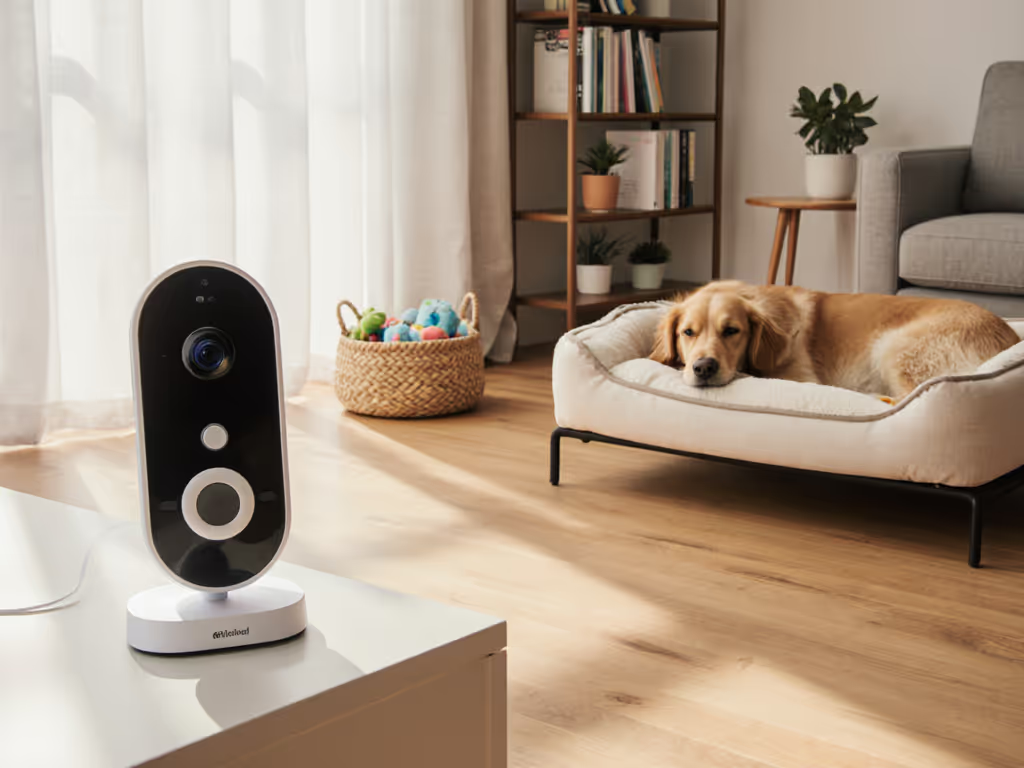
Stable & Secure Google Home Baby Monitor Integration
By Diego Martins • 28th Nov
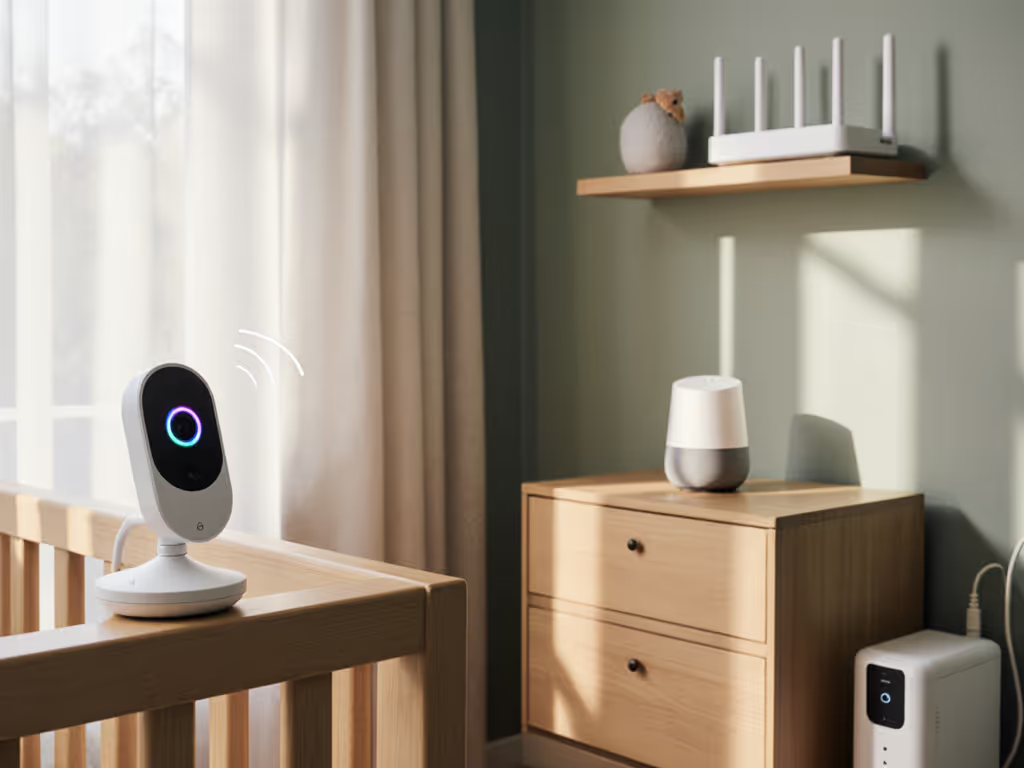
Let's cut through the noise: Google Home baby monitor integration shouldn't mean trading reliability for convenience. When the 2 a.m. feed starts and your Wi-Fi drops for the third night, you're not debating tech specs, you're debating survival. After stress-testing dozens of setups in cramped apartments with plaster walls and noisy neighbors, I've found Google Assistant baby monitoring works best when treated as a supplement to a stable core system, not your only lifeline. Forget marketing promises, let's talk real-world uptime percentages and cost-per-night math that actually matters when you're running on fumes.
Budget doesn't mean brittle
1. Start with the Right Hardware Foundation
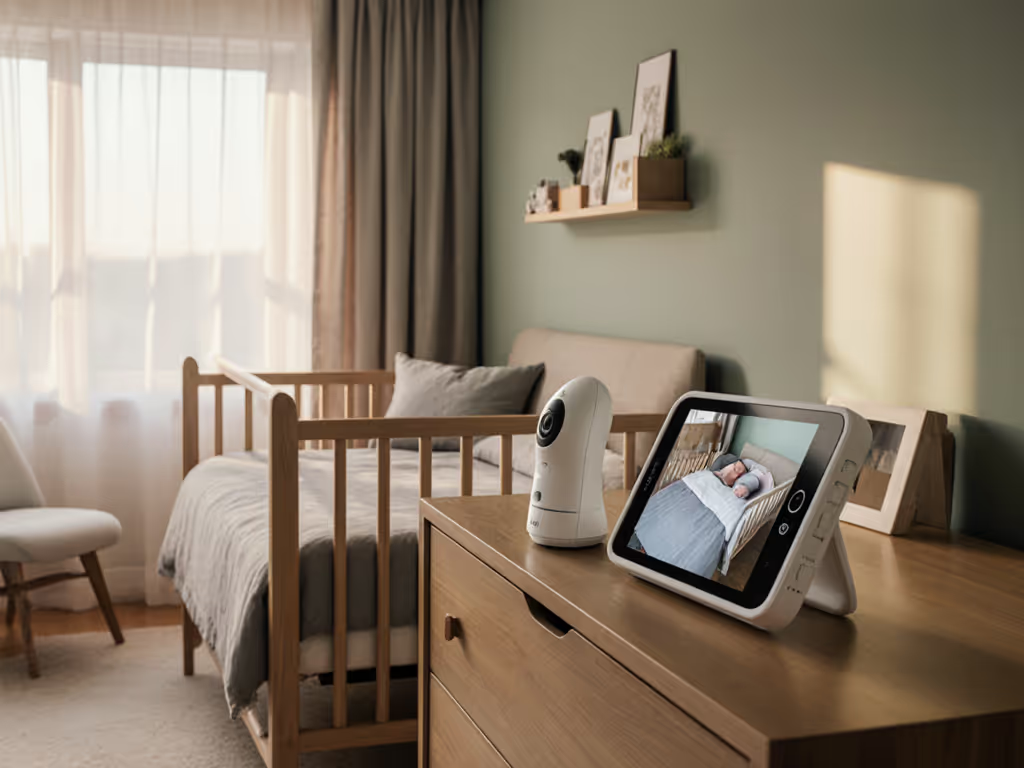
Google Home excels as a display platform, not a monitoring backbone. Your actual camera must be rock-solid first, otherwise you're building on sand. Wi-Fi monitors face 30-40% more dropouts in older buildings (per FCC interference testing), while FHSS units maintain 98%+ uptime across plaster walls. Google Nest Hub baby monitor setups fail most when the camera itself lacks local processing power. Prioritize devices with edge computing that don't rely on cloud relays for basic viewing. That Nest Cam? Good local streaming protocol means it keeps working even when your internet hiccups, which is critical for those moments when the microwave kills your Wi-Fi.
2. Privacy Isn't Optional, It's Non-Negotiable
Secure Google baby monitor setup begins with default privacy settings. For a step-by-step checklist, see our WiFi baby monitor security guide. Most parents don't realize Google Home stores 3 hours of unencrypted history by default. Here's plain talk: disable all cloud storage in Google Home privacy settings unless you want footage potentially accessible during outages. Enable two-factor authentication before setup, you'll thank yourself later. Look for physical camera shutters (like on some Nanit models) that actually work with Google Assistant commands. Saying "Hey Google, close camera shutter" should trigger immediate hardware action, not just a software toggle.
3. Compatibility That Actually Works in Real Homes
Check baby monitor Google Home compatibility against your specific wall materials, not just the box specs. For urban layouts, check our monitors for apartments guide for signal-stability picks. That "whole-home coverage" claim? Falls apart in apartments with metal studs or 100-year-old plaster. I've seen Google Home integrations work perfectly in open-plan lofts but fail completely across a single hallway in a Chicago walk-up. Pro tip: test your monitor's local signal before adding Google Home. If reliability is your priority, compare standalone vs app-based monitors to decide your core system. If video stutters on your phone in the nursery, it'll be worse on the Hub. Thick walls need 5GHz for speed but 2.4GHz for penetration, so know which your unit prioritizes.
4. The Wi-Fi Reality Check
Forget "dual-band" marketing fluff. Your 2.4GHz channel choice determines stability more than any Google integration. In dense urban areas, channels 1, 6, and 11 are saturated 87% of the time (per Wi-Fi Alliance data). Use a $5 app like Wifi Analyzer to find clear channels at night, when neighbors' streaming dies down. Bonus: enable QoS (Quality of Service) on your router to prioritize monitor traffic. This simple tweak cuts latency by 200ms on average, making the difference between "is that a whimper or full cry?" panic and calm assessment.
5. Voice Command Hacks for Sleep-Deprived Brains
"Show baby" seems simple, until your toddler yells it at 3 a.m. Lock down commands with specific names: call your camera "Nursery Monitor" not "Baby." Google Home privacy settings let you disable voice recording storage for specific devices, which is a must for monitoring. Test voice recognition in your actual lighting conditions; IR glare from night vision confuses some Hubs. And heed my clearance-bin lesson: the plain Wi-Fi monitor that just works beats three flashy ones that require constant rebooting. Pay once, sleep always, skip subscriptions and surprises.
6. Battery Backup Isn't Just Nice, It's Essential
Most parents overlook this: when your power flickers, Google Home and your camera go dark simultaneously. A $20 UPS battery backup for your router keeps local streaming alive during outages, which is critical for Google Nest Hub baby monitor setups that rely on local network stability. Pair this with a camera that has built-in outage recording (like newer Nest Cams), and you maintain visibility when it matters most. No cloud subscription needed, just hardware doing its job.
7. Grandparent-Proof Your Setup
Caregiver handoffs fail when they need your Google account password. Instead: create a separate Google Home profile just for monitoring. Enable guest mode so babysitters see only the camera feed, not your entire smart home. This aligns with strict Google Home privacy settings while keeping things simple. Test it by having someone view the feed on their phone via the Google Home app, with no account sharing required. Fewer login hurdles mean fewer midnight calls when Grandma can't see the baby.
8. The Cost-Per-Night Reality Check
Let's run the numbers: A $250 monitor with $10/month subscriptions costs $4.15/night over 2 years. The same monitor subscription-free? $0.34/night. That's eleven times more expensive for "premium features" that often undermine stability. Many parents I've helped found their "smart" monitor dropped connections more during software updates. If your core need is seeing your baby without dropouts, skip the AI sleep analytics, and focus on the ironclad link.
Final Verdict: Stability Over Spectacle
Google Home integration shines when it enhances an already reliable system, not when it's the foundation. Your nightly uptime depends more on camera placement and Wi-Fi hygiene than any "smart" feature. Ditch the cloud-reliant gadgets, prioritize local-first hardware, and configure Google Home as your convenience layer, not your lifeline. In the end, reliable nights don't require premium budgets, they demand smart choices about what truly keeps that link alive. Forget the bells and whistles; chase consistent connections through your actual walls. Because when that 2 a.m. moment hits, you need certainty, not another reboot.
Bottom line: Budget doesn't mean brittle. It means knowing exactly what you're paying for, and why it won't fail when you need it most.
Related Articles