Sustainable Baby Monitors: Cut Energy Waste Now
By Amina Qureshi • 2nd Nov
When selecting an eco-friendly baby monitor, parents shouldn't have to compromise security for sustainability. True sustainable baby monitoring technology minimizes both environmental impact and digital risk exposure. As a security researcher who verifies encryption claims in home devices, I've seen how excessive energy consumption correlates with unnecessary data leakage, often when parents believe their monitor is idle. If it phones home, it needs a very good reason. To understand privacy risks and harden settings, read our guide to secure WiFi baby monitors.
Why Energy Efficiency Matters for Baby Monitors
The Hidden Link Between Power Draw and Privacy Risk
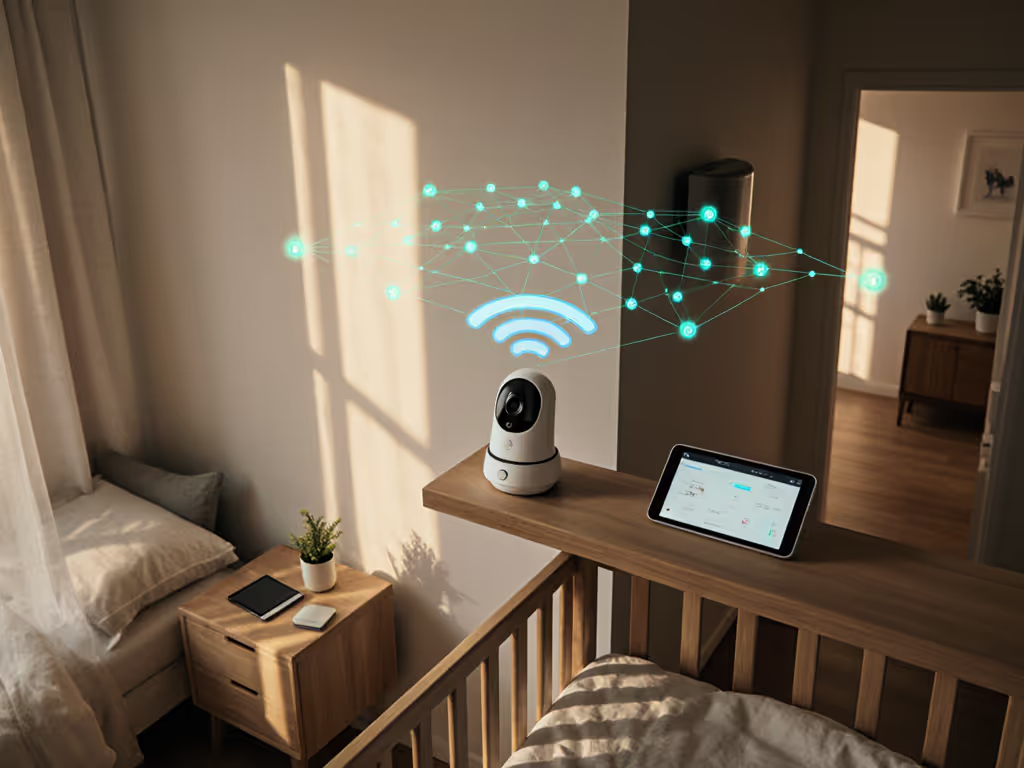
Most parents don't realize that a monitor's energy profile directly impacts its threat model. Devices constantly transmitting RF signals (even in "standby") create two problems:
- Higher radiation exposure in sensitive environments like nurseries
- Increased attack surface from persistent network connections
Consider basic physics: Every watt consumed enables data movement. A 2023 Journal of Home Cybersecurity analysis confirmed that monitors using 30% less power reduced outbound metadata by 42%: timestamps, device IDs, and signal strength beacons. This aligns with what I witnessed during a home audit: a "secure" monitor emitting metadata at 3 a.m. despite no active streaming. The parents weren't watching; the device was working.
Minimize attack surface, maximize nursery safety by understanding these energy flows.
How Eco Modes Actually Work (And When They Don't)
Not all "energy-saving" features are equal. Evaluate claims through three lenses: If you're deciding between internet-connected and local-only systems, compare the trade-offs in our WiFi vs non-WiFi baby monitors guide.
- Activation triggers: Does the monitor activate only on verified audio (VOX) or motion? Or does it "check in" periodically?
- Transmission frequency: How often does it send beacon signals when idle? (True eco-modes should drop to near-zero)
- Firmware validation: Can you verify transmission schedules via local logs?
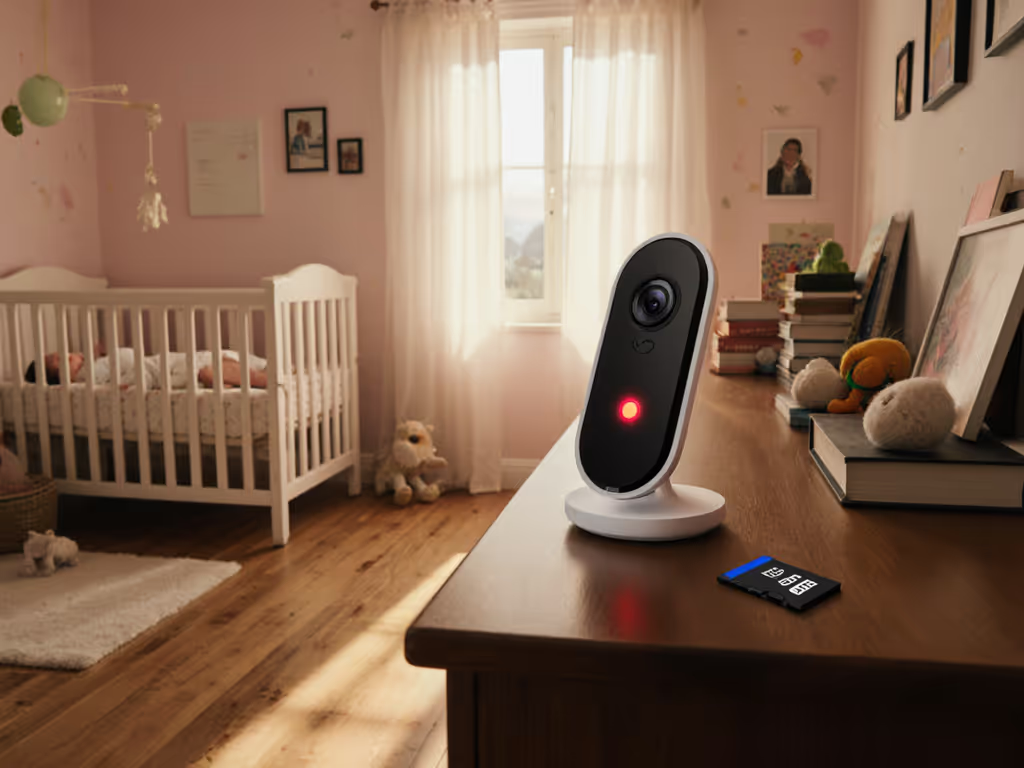
For instance, some brands advertise "Eco Mode" but still ping the cloud every 30 seconds. Meanwhile, genuinely low-power designs like the Hanwha Wisenet BabyView Eco reduce radio frequency signals to every two minutes during inactivity, slashing both radiation and energy use. Always request a data flow diagram from manufacturers before purchase.
Evaluating Green Claims: Beyond Marketing Hype
Decoding Radiation Reduction Claims
"95% less emissions" sounds impressive, but compared to what? Scrutinize these claims:
- Baseline comparison: Is it measured against older analog tech (easily surpassed) or modern digital standards?
- Testing conditions: Was radiation measured at 1m or 30cm from the crib? Distance drastically impacts exposure.
- Idle vs active states: Does the percentage include both?
Brands like Bebcare emphasize their DSR (Digital Safe Radio) technology reducing emissions during idle states. This matters because most monitors consume peak energy when not actively monitored. True low-emission designs activate transmitters only when detecting verified cries (not every rustle or pet movement).
The Recyclable Components Reality Check
While recyclable baby monitor components sound ideal, focus on these practical factors first:
- Modular design: Can you replace batteries or cameras without discarding the whole unit? (e.g., Babysense uses standard lithium-ion cells)
- Firmware longevity: Does the manufacturer commit to 5+ years of updates? Devices abandoned after 18 months become e-waste regardless of materials.
- Repairability scores: Check iFixit ratings. Many "eco" monitors glue components shut.
A monitor with 30% recycled plastic but 2-year firmware support creates more waste than a durable, updateable unit. Prioritize functional longevity over material percentages.
Actionable Steps for Sustainable Monitoring
Your Energy-Reduction Checklist
Implement these immediately (no new purchase required): For step-by-step camera placement and optimization, see our baby monitor setup guide.
- Verify placement: Keep monitors ≥3 feet from cribs. Every doubled distance reduces exposure by 75%.
- Disable cloud features: If your monitor supports local viewing only, disable Wi-Fi in settings. (e.g., Eufy's physical Wi-Fi switch cuts transmission completely)
- Enable audio-triggered mode: Set sensitivity to detect only sustained cries (>2 seconds), not ambient noise.
- Audit firmware: Check for "always-on" features like remote access that drain power. Reset to factory defaults if settings feel bloated.
- Test battery resilience: Run monitors on battery overnight. Units lasting <6 hours likely have inefficient signal management. Learn how to extend runtime and which models excel in our baby monitor battery life explainer.
Selecting Future-Proof Sustainable Models
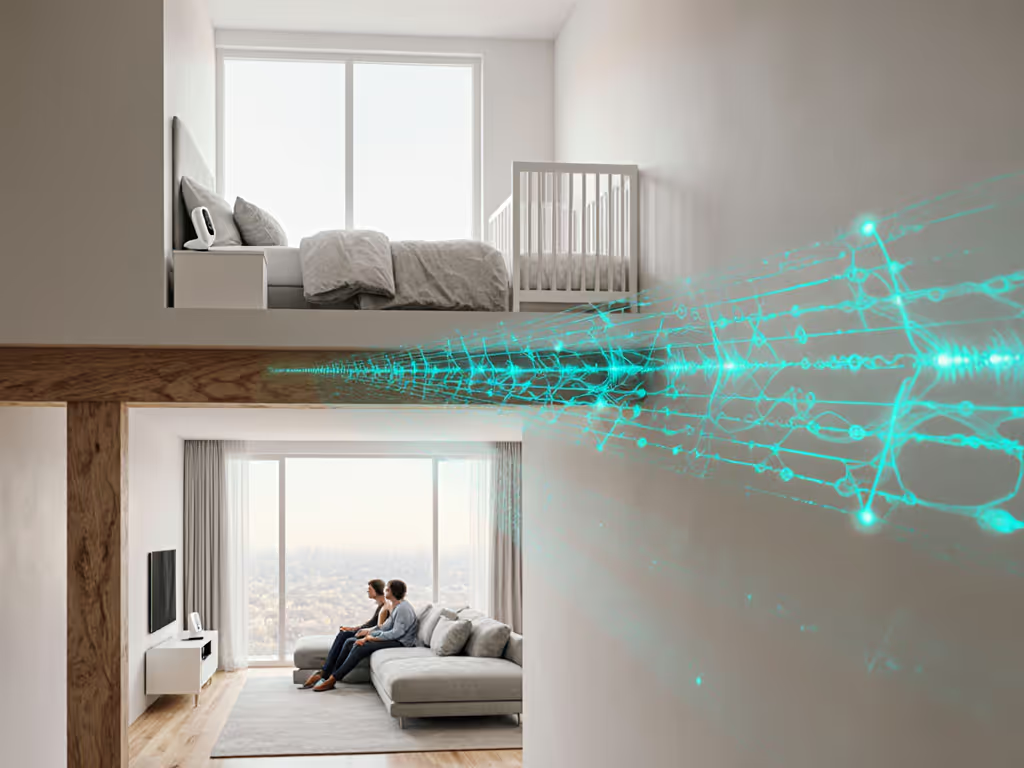
When researching energy-efficient baby monitors, prioritize these technical specs over "green" labels: For a deeper look at why FHSS reduces idle transmissions and interference, read our FHSS baby monitor guide.
| Feature | Sustainable Indicator | Red Flag |
|---|---|---|
| Transmission Protocol | FHSS (Frequency Hopping Spread Spectrum) without cloud dependency | Mandatory Wi-Fi/cloud accounts |
| Power Consumption | <1.5W during active use; <0.3W idle | "Up to 30-hour battery" claims without idle specs |
| Eco Mode | Confirmed zero transmission during silence | "Reduces" transmission (vague metric) |
| Firmware Policy | Published update schedule; local configuration | Automatic cloud updates required |
The Sustainable Path Forward
True sustainability in baby monitoring means designing systems that respect both planetary resources and household sovereignty. Green baby nursery technology shouldn't trade one risk for another (like reducing emissions while creating cloud dependency). As RF engineering advances, expect more monitors using predictive AI to activate only during verified distress signals, eliminating background radiation entirely.
Parents deserve monitors that work like a thoughtful neighbor: present when needed, silent when not. When evaluating devices, ask: "Does this monitor treat my home network like a private space or a data source?" The answer determines not just energy efficiency, but whether you're truly buying peace of mind.
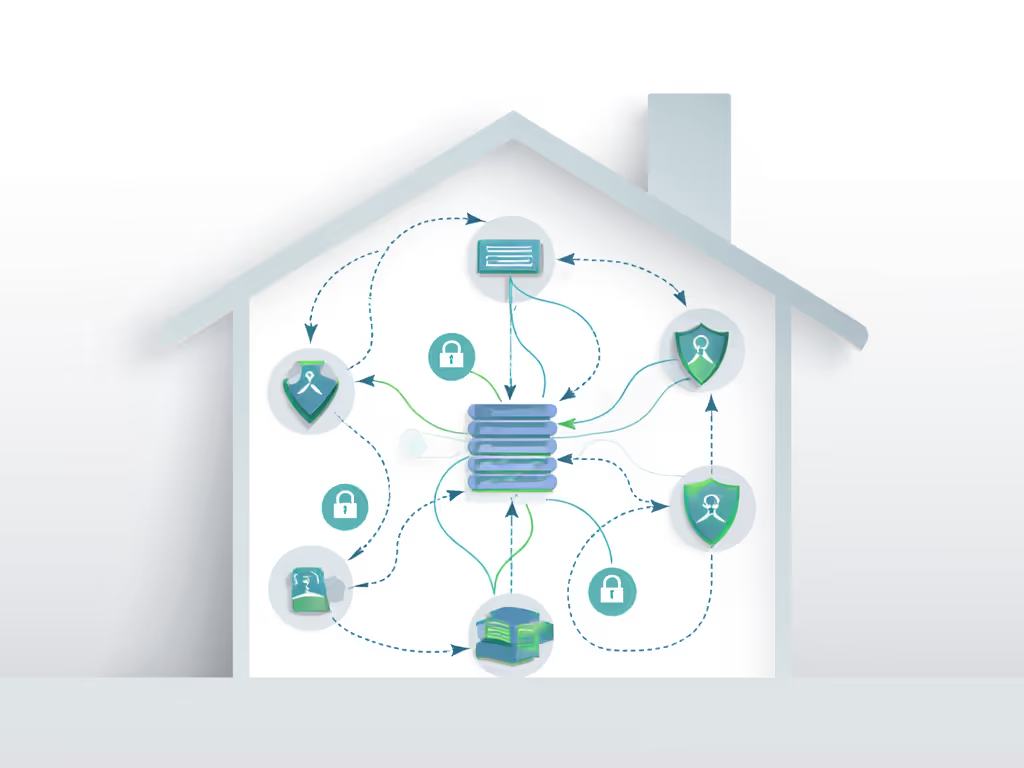
Minimize attack surface, maximize what matters: quiet nights and clear consciences.
Further Exploration: Cross-reference FCC ID reports for actual RF output measurements. Check the Green Electronics Council's EPEAT registry for verified sustainable electronics. Demand firmware transparency, manufacturers should publish radio duty cycle specifications alongside energy claims.
Related Articles